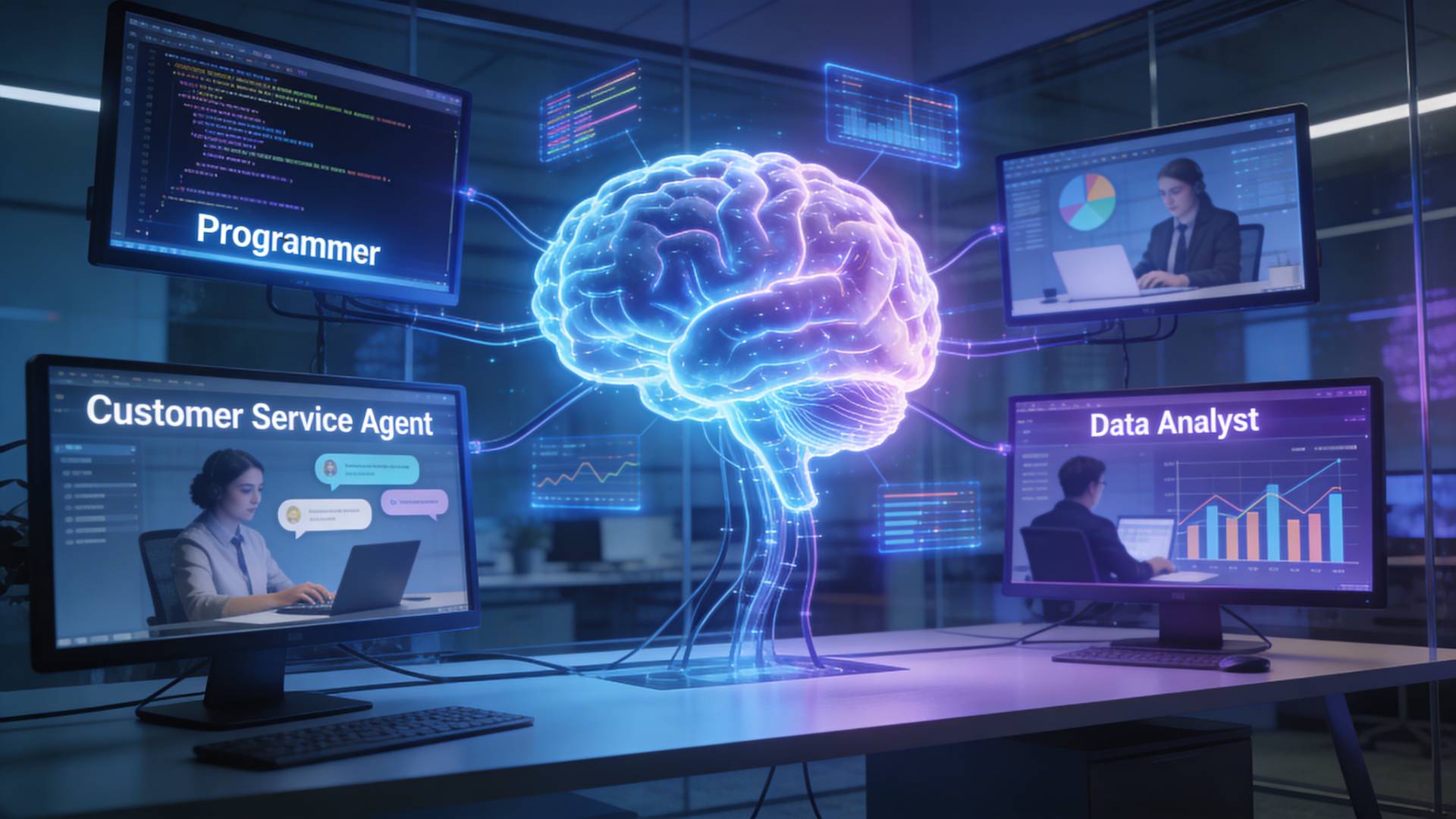
Artificial intelligence is moving fast, and many people are wondering the same thing: Will AI replace jobs?
To better understand this risk, Anthropic, the company behind the Claude AI model, has introduced a new research framework designed to track how AI could impact the labor market. The goal isn’t to predict job losses immediately, but to detect early warning signs before large-scale disruption happens.
Let’s break down what this new tool does and what it means for workers.
What Is Anthropic’s New AI Job Monitoring Tool?
Anthropic researchers have developed a new metric called “Observed Exposure.”
This measure looks at how likely a job is to be affected by AI, especially large language models (LLMs) like ChatGPT or Claude.
Instead of relying only on theoretical predictions, the system combines:
- The tasks required for each job
- Which tasks can AI theoretically perform
- Real-world data showing how AI is actually used today
By combining these factors, the tool provides a clearer picture of which jobs could be automated and which ones are still safe from AI disruption.
The idea is simple: if AI is already performing many tasks in a profession, that occupation may be more vulnerable in the future.
AI Has Not Yet Replaced Many Jobs
Despite the growing attention around AI, the research shows something surprising.
According to Anthropic’s study, there is currently limited evidence that AI has significantly affected employment.
In fact:
- AI adoption is still far below its theoretical potential
- Only a fraction of the tasks that AI could perform are actually automated today
- Unemployment levels among highly exposed workers have not increased significantly since 2022
So while AI technology is advancing quickly, its real-world impact on jobs is still developing.
Jobs With the Highest AI Exposure
Some occupations already show higher exposure to AI because their tasks are digital, repetitive, or text-based.
According to the study, the jobs with the highest AI task coverage include:
- Computer Programmers – 75% task coverage
- Customer Service Representatives – 70.1%
- Data Entry Keyers – 67.1%
- Medical Records Specialists – 66.7%
- Market Research Analysts & Marketing Specialists – 64.8%
These roles often involve data processing, communication, or coding, which are areas where AI tools perform particularly well.
However, “exposure” does not necessarily mean job replacement. In many cases, AI simply assists workers rather than fully automating their roles.
Jobs With Low Risk From AI
Interestingly, about 30% of occupations currently show little to no AI exposure.
These jobs usually require physical work, human interaction, or specialized manual skills.
Examples include:
- Cooks
- Motorcycle mechanics
- Lifeguards
- Bartenders
- Dishwashers
- Dressing room attendants
Because these roles involve physical tasks or real-world environments, AI tools cannot easily automate them.
Younger Workers May Face New Challenges
One interesting finding from the study relates to young workers entering the job market.
While unemployment has not increased in AI-exposed professions, researchers noticed a possible trend:
Hiring in some AI-exposed fields appears to be slowing for workers aged 22–25.
This could mean companies are:
- Automating entry-level tasks
- Hiring fewer junior employees
- Using AI tools instead of expanding teams
However, researchers caution that this evidence is still early and not conclusive.
How Anthropic Measures AI Exposure
Anthropic’s methodology combines three key datasets:
- O*NET database – which lists tasks for around 800 occupations
- Anthropic usage data – showing how AI is used professionally
- LLM capability research – estimating which tasks AI can theoretically perform
Jobs receive higher exposure scores when:
- Many of their tasks can be automated by AI
- AI tools are already being used for those tasks
- Automation replaces work rather than simply assisting it
This approach helps researchers track real-world AI adoption instead of relying only on predictions.
AI Could Still Transform the Labor Market
Although the current impact appears small, experts believe AI could still reshape the workforce in the coming years.
Anthropic CEO Dario Amodei previously warned that AI could bring “unusually painful” disruptions to the job market if the technology continues to advance rapidly.
The purpose of this new monitoring system is to identify changes early, allowing policymakers and businesses to respond before large-scale job displacement occurs.
The Bottom Line
Artificial intelligence is already changing how people work, but the major disruption many fear hasn’t happened yet.
Anthropic’s research shows:
- AI currently affects only a portion of job tasks
- Most occupations still rely heavily on human skills
- Early signals suggest some changes in hiring patterns
For now, AI is more likely to augment human workers rather than fully replace them.
But as AI tools continue improving, tracking their impact on the labor market will become increasingly important.