Let’s start with something uncomfortable.
Most people don’t get hacked because they’re careless. They get hacked because they’re busy.
You open a new account. It asks you to create a password. You type something familiar, maybe tweak it a little, and move on. It feels harmless. Efficient.
But here’s the reality: attackers don’t need to “guess” your password the way a person would. They use automated systems that test millions, sometimes billions, of combinations in minutes. And those systems are built on the assumption of predictable human behavior.
So the real question isn’t “How clever is my password?”
It’s “How predictable is it?”
The good news? You can create a secure password in seconds — without turning it into a complicated ritual.
Let’s walk through it properly.
Why Is It Important to Create a Secure Password?
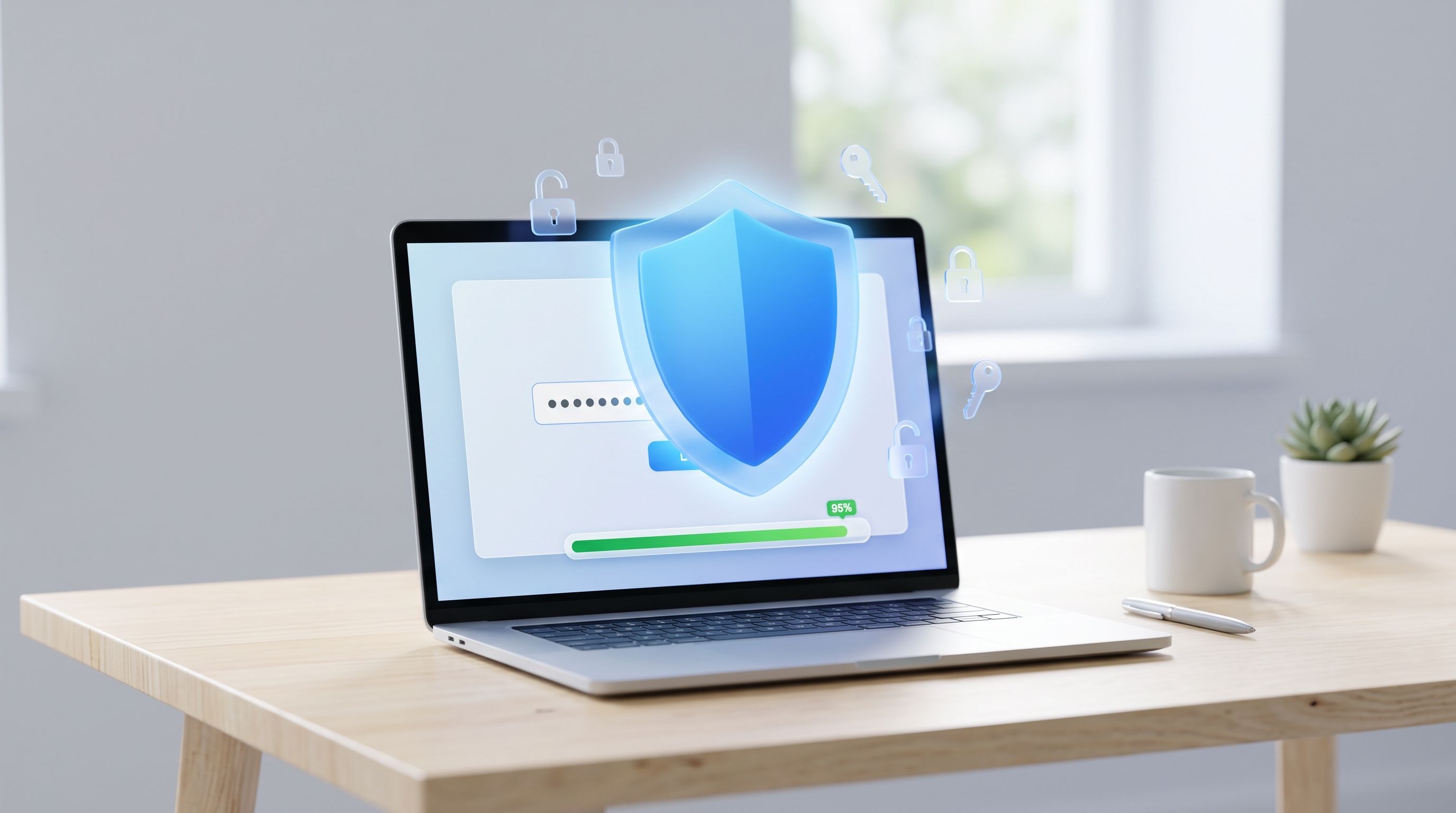
Because passwords are still the front door to your digital life.
Even with biometrics and two-factor authentication, your password remains the foundation. If that foundation is weak, everything built on top of it is shaky.
Think about what one password often protects:
- Your email
- Banking access
- Cloud storage
- Social accounts
- Work platforms
Now imagine someone gaining access to your email. They can reset nearly everything else.
It’s not dramatic. It’s just how the system works.
Creating a secure password isn’t paranoia. It’s basic digital hygiene.
What Makes a Password Truly Secure?
People often assume complexity equals security.
That’s only half true.
A secure password rests on three pillars:
1. Length
The longer the password, the harder it is to crack. Aim for at least 12–16 characters. More is better.
2. Variety
Use a mix of:
- Uppercase letters
- Lowercase letters
- Numbers
- Symbols
But don’t rely only on swapping letters for symbols (like “P@ssw0rd”). That trick is older than you think.
3. Randomness
This is the big one.
If your password is meaningful to you, it’s likely structured in a way machines are trained to detect. Real security comes from combinations that don’t follow obvious patterns.
When you generate a password that feels random, that’s when it gets strong.
How Can I Generate a Strong Password Quickly?
If speed is your main concern, the simplest answer is to use a strong password generator.
Tools like the FileReadyNow password generator allow you to create a secure password instantly with customizable length and complexity.
The advantage? It removes human bias. Humans create patterns. Software creates randomness.
How to Create a Secure Password in Seconds
You don’t need to overthink it. Here are practical, fast methods.
1. The Four Random Words Method
Pick four unrelated words. Not from your life. Just random.
Example:
CandleOrbitGiraffeStone
Now add:
- A number
- A symbol
- Random capitalization
Example:
Candle7Orbit#GiraffeStone
It’s long. It’s unpredictable. And surprisingly easy to remember.
2. Use a Random Password Generator
Sometimes you don’t want to invent anything at all.
A reliable random password generator eliminates human predictability. It creates strings that are mathematically random, something your brain isn’t naturally wired to do.
If you want something quick and dependable, you can use the password generator from FileReadyNow to instantly generate good password combinations that meet modern security standards.
No guesswork. No patterns. Just solid randomness.
3. Turn a Sentence Into Secure Code
Take a sentence you’ll remember:
“I started my first job in 2018 and loved it.”
Now compress it:
Ismfji2018&Li!
To anyone else, it looks chaotic. To you, it’s reconstructable.
How Long Should a Secure Password Be?
- 8 characters? Outdated.
- 10 characters? Better, but not ideal.
- 12–16 characters? Strong baseline.
- 20+ characters? Excellent.
Every additional character increases the number of possible combinations exponentially.
What Should I Avoid When I Create a Password?
- Birthdays
- Names of partners or pets
- Keyboard patterns (12345, qwerty)
- Simple substitutions (A → @, S → $)
- Reusing the same password across multiple sites
Avoid slight variations like changing Daniel2020! to Daniel2024!. Attack tools test common variations automatically.
Is It Safe to Store Generated Passwords?
If you’re using long, random strings, remembering them becomes unrealistic. That’s where password managers come in.
A password manager encrypts and stores credentials securely. You only remember one master password — which should be extremely strong.
Quick Action Plan: Create a Secure Password Now
- Choose at least 16 characters.
- Use four random words or a trusted random password generator.
- Ensure the password is unique to that account.
- Store it safely in a password manager.
Final Thoughts
You don’t need to become a cybersecurity expert to stay safe online. You just need to stop relying on predictable patterns.
When you create a secure password that’s long and random, you dramatically reduce your risk. When you generate good password habits across all accounts, you multiply that protection.
Security doesn’t have to be complicated. It just has to be intentional.