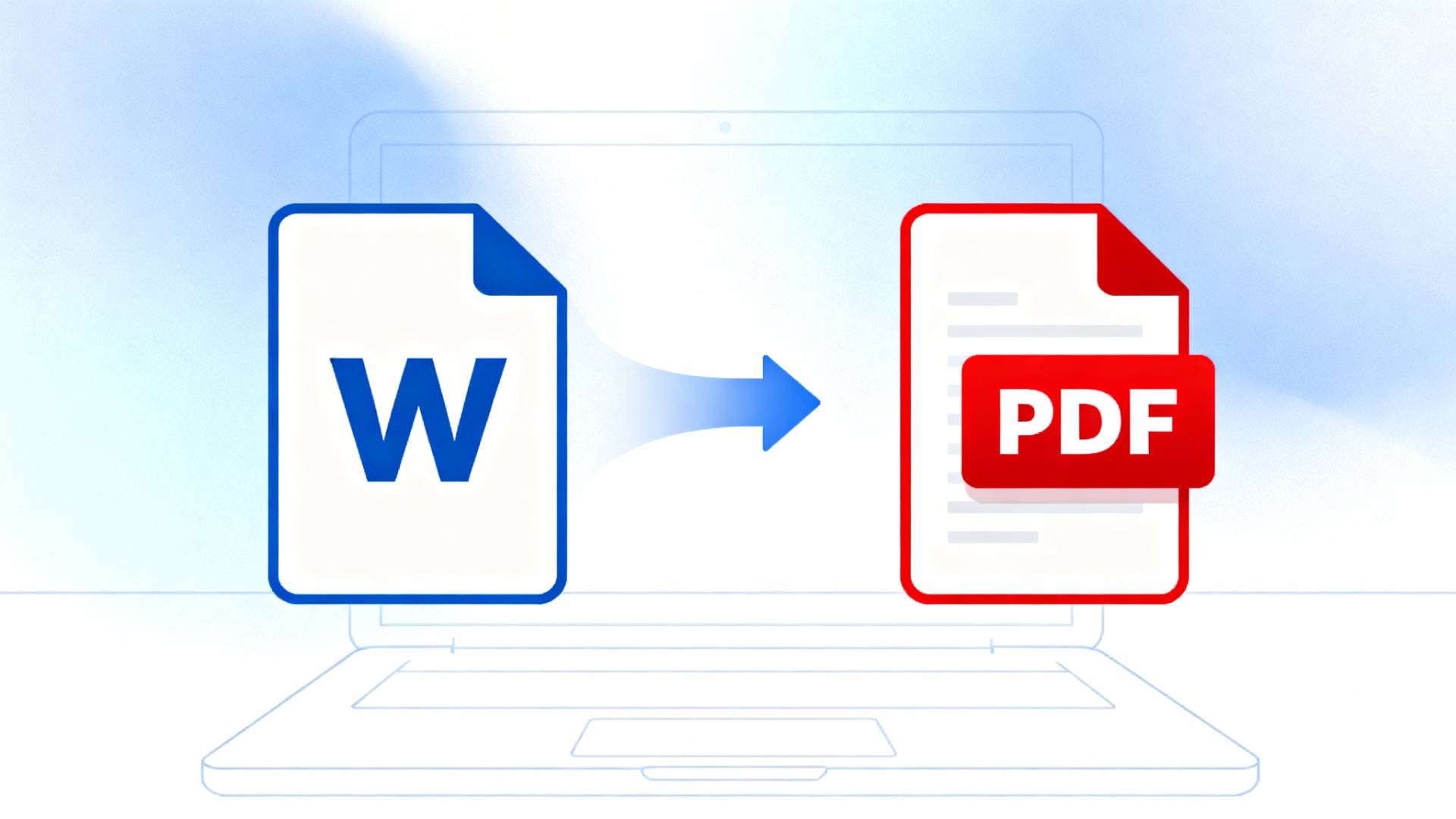
Let's start with a quick reality check: you've spent time writing, editing, and formatting a document in Microsoft Word. It looks exactly how you want it. Then you send it to someone, and when they open it on their machine, the fonts are off, the layout's a mess, and the whole thing looks nothing like what you built.
That's the problem PDF solves.
A PDF locks your formatting in place. What you see is what they get, no matter what device, operating system, or software they're using. It's non-editable by default, which makes it perfect for contracts, resumes, reports, forms, and anything you want to look polished and permanent.
So knowing how to save a Word document as a PDF isn't just a nice-to-have skill. It's something you'll use constantly.
Here's every way to do it, across platforms, step by step.
Why Save as PDF Instead of Sending the Word File?
Before we get into the how, let's talk about the why, because it actually matters.
Word documents are "living" files. They respond to whatever fonts, settings, or software version the reader has. That means your carefully spaced resume could look completely different when a hiring manager opens it. Your table might break. Your headers might shift.
PDF doesn't care. It captures the document as a snapshot, visually frozen. It's also smaller in file size (usually), widely accepted by every system, and safer to share because the reader can't accidentally edit it.
For anything professional or final, like resumes, proposals, invoices, or academic submissions, PDF is the standard. Always.
How to Save a Word Document as a PDF on Windows
This is probably the most common situation, and honestly, Microsoft made it easy. No third-party tools needed.
Method 1: Save As (The Classic Way)
- Open your document in Microsoft Word.
- Click File in the top-left corner.
- Select Save As.
- Choose your folder location.
- In the Save as type dropdown, select PDF (*.pdf).
- Click Save.
Done. Your PDF appears in the same folder you selected. Takes about ten seconds once you know where to look.
One thing worth noting: before you hit Save, you'll see an Options button. Click it if you need to save only specific pages, include document properties, or adjust image quality. Most people skip it, but it's there when you need it.
Method 2: Export
- Click File.
- Select Export.
- Click Create PDF/XPS Document.
- Choose your settings and hit Publish.
This method gives you slightly more control over quality settings, especially useful for documents that are going to print.
Method 3: Print to PDF
This one's a workaround that's surprisingly clean:
- Press Ctrl + P to open the Print dialog.
- Under Printer, select Microsoft Print to PDF.
- Click Print.
- A Save dialog will pop up. Name your file and choose your location.
Not the most intuitive route, but it works perfectly and has saved a lot of people in a pinch.
How to Save a Word Doc as PDF on Mac
Mac users, you've got it even easier. macOS has PDF export baked into almost everything through the Print menu.
Method 1: Save As (Same as Windows)
- Go to File > Save As.
- Under File Format, scroll down and select PDF.
- Click Export.
Clean and simple.
Method 2: Export to PDF
- Go to File > Export To > PDF.
- A dialog appears. Name the file, choose the location, and click Export.
Method 3: Print to PDF (Mac Style)
- Press Cmd + P.
- In the bottom-left of the Print dialog, click the PDF dropdown.
- Select Save as PDF.
- Name it, choose a folder, and click Save.
This works for any app on Mac, not just Word. Once you know it exists, you'll use it everywhere.
How to Convert Word to PDF Online (No Software Needed)
No access to a desktop app? Maybe you're on a school computer, or you just don't want to install anything. Online converters handle this well.
Tools like FileReadyNow let you upload your Word file and download a properly formatted PDF, fast, clean, and without needing an account in many cases. It's a solid option when you're working across devices or need something done quickly from a browser.
General steps for any online converter:
- Open the tool in your browser.
- Upload your
.docor.docxfile. - Wait for the conversion (usually under a minute).
- Download your PDF.
A few things to keep in mind with online tools:
- Privacy: If your document contains sensitive info like financial data, personal details, or legal content, be careful about what you upload to a third-party server. Read their privacy policy.
- Formatting: Most good converters handle formatting well, but very complex layouts with lots of custom fonts or embedded objects may need a quick review after conversion.
- File size limits: Free tiers often cap file size. For large documents, desktop Word is more reliable.
How to Save Word as PDF Using Google Docs
If you've already got the file in Google Docs, or want to convert it there, here's how:
- Upload your
.docxfile to Google Drive. - Double-click to open it (it'll open in Google Docs).
- Go to File > Download > PDF Document (.pdf).
That's it. Google handles the conversion and your browser downloads the PDF directly.
One caveat: Google Docs sometimes interprets Word formatting slightly differently. If you have complex tables, unusual fonts, or precise spacing, double-check the output before sending it anywhere important.
Common Issues (and How to Fix Them)
"My PDF looks different from my Word file."
This usually happens because of fonts. If you used a font that the converter doesn't have access to, it'll substitute something else. Fix: embed fonts before saving. In Word, go to File > Options > Save, and check "Embed fonts in the file."
"The PDF file is huge."
Word embeds images at full resolution by default. Before saving, compress images: go to File > Options > Advanced, scroll to Image Size and Quality, and check "Discard editing data" and adjust the resolution.
"My hyperlinks don't work in the PDF."
When saving as PDF from Word, make sure you're using the Save As method rather than Print to PDF. Links are usually preserved better that way. Online converters vary; some keep links, some don't.
"The PDF is locked/read-only."
That's actually the point. PDFs are designed to be non-editable. If you need someone to fill in a form, you'll want a PDF editor to add fillable form fields.
Which Method Should You Use?
- Have Microsoft Word installed? Use File > Save As > PDF. It's the most reliable.
- On a Mac? File > Export To > PDF is equally solid.
- No software, need it done from a browser? An online converter like FileReadyNow works great for standard documents.
- Already working in Google Docs? Download directly as PDF from the File menu.
- Need to print a hard copy and a PDF? Use Print to PDF and handle both in one step.
Final Thoughts
Converting word to PDF isn't complicated, but knowing which method to use, and understanding why the output sometimes looks slightly off, makes a real difference. The goal isn't just to have a PDF. It's to have one that looks exactly like you intended, opens reliably on any device, and gives the reader a clean, professional experience.
Take thirty seconds after converting to open the PDF and scroll through it. Catch any formatting quirks before they become someone else's problem. It's a small habit that saves a lot of embarrassment.
And if you're regularly working with documents that need to go out looking sharp, it's worth finding a workflow, whether desktop export, online tool, or both, that you trust and can repeat without thinking about it.
Frequently Asked Questions
No. Word has built-in PDF export via File > Save As. You can also use a free online converter like FileReadyNow if Word isn't available.
Usually a font issue. Go to File > Options > Save and enable "Embed fonts in the file" before saving to fix it.
Yes, tools like FileReadyNow are safe for general documents. Just avoid uploading sensitive or confidential files to any third-party tool — use Word's built-in export instead.