Free Online Audio Converter: Change Formats Without Losing Quality

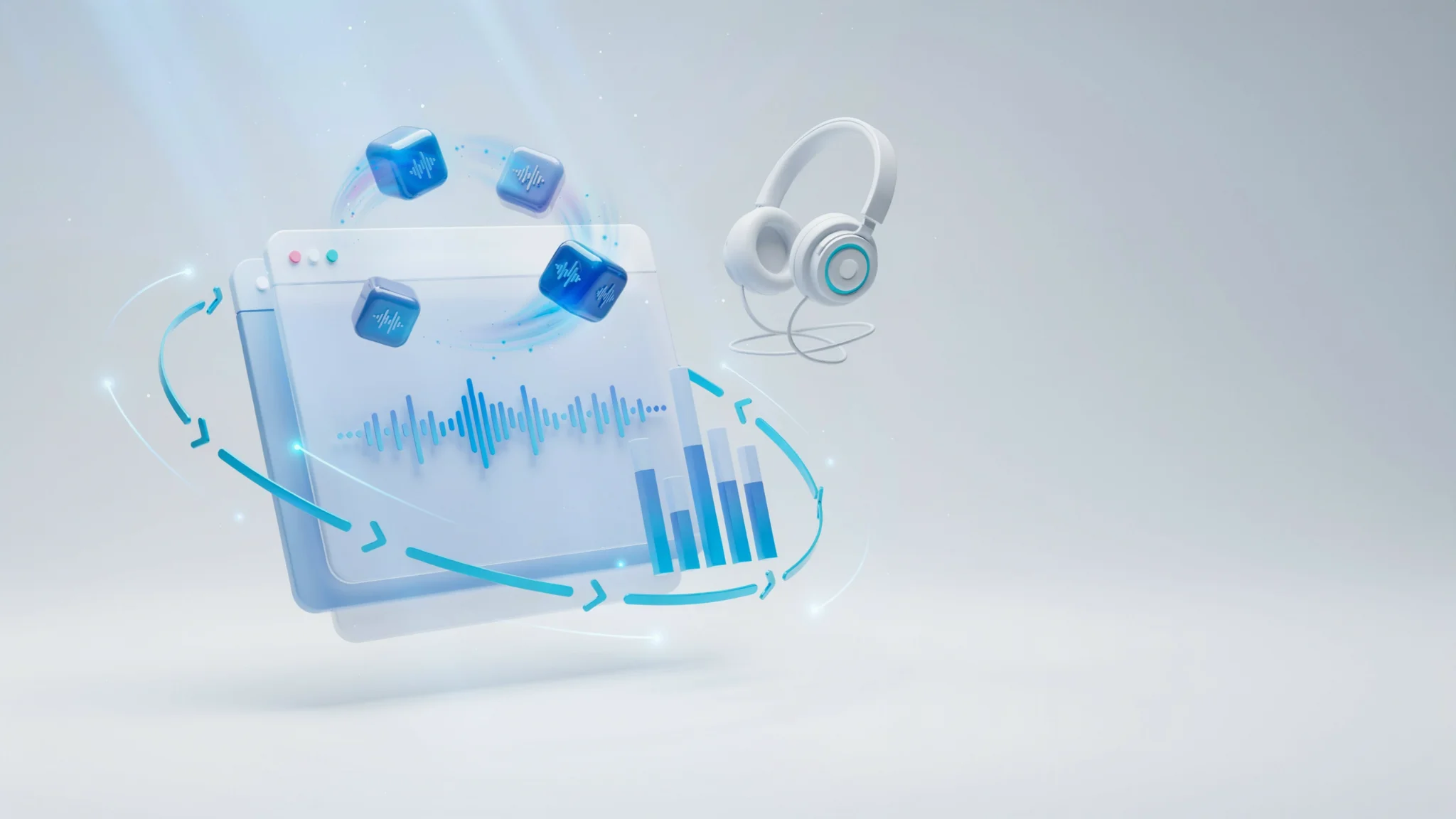
TL;DR: The free Audio Converter from FileReadyNow lets you switch between MP3, WAV, FLAC, AAC, OGG, OPUS, and M4A directly in your browser. No sign‑up, no software install. Upload up to 100 MB per file, choose your output format and quality settings, then download. Your files are automatically deleted after processing. Ideal for sharing, editing, archiving, or streaming.
You've just received an audio file, but it won't open on your phone. Or you need to send a studio‑quality recording that's too large to email. Format mismatches are a daily headache for podcasters, musicians, and anyone working with audio. The FileReadyNow Audio Converter solves that without installing anything. It's a free online tool that converts between MP3, WAV, FLAC, AAC, OGG, OPUS, and M4A right in your browser. No sign‑ups, no software download. You pick the output format, tweak quality settings if needed, and get a file that works exactly where you need it: a voice memo on an iPhone, an archival master for a music project, or a compressed track for web streaming. I recently used it to turn a WAV interview file into a compact MP3 for a client. The whole process took under a minute, and the spoken audio remained crisp. Let's walk through what this converter offers and how to make the most of it.
What Audio Formats Does the FileReadyNow Audio Converter Support?
The converter handles MP3, WAV, FLAC, AAC, OGG, OPUS, and M4A. You can switch between any pair, for example, OGG to MP3 or FLAC to AAC, with just a few clicks.
Each format shines in different scenarios:
- MP3 , Universal compatibility, small file size.
- WAV , Uncompressed, full fidelity for editing and mastering.
- FLAC , Lossless compression, perfect for archiving large music libraries.
- AAC , Better quality than MP3 at similar bitrates, used widely on Apple devices and streaming platforms.
- OGG / OPUS , Open‑source, efficient formats often found in web audio and voice recordings.
- M4A , Apple's audio container, typically holding AAC or Apple Lossless.
How Can I Convert Audio Without Losing Sound Quality?
Choose FLAC or WAV as your output format for true lossless conversion: every bit of the original audio is preserved. For MP3 and AAC, the tool's quality slider lets you pick a high bitrate (320 kbps) that sounds transparent in most listening tests.
Lossy formats like MP3 and AAC shrink files by discarding sounds the human ear rarely misses. At 320 kbps, the difference is negligible for casual listening, podcasts, and even many music tracks. When you select FLAC, the converter compresses without any data loss, giving you a smaller file than WAV but identical audio. WAV remains completely raw for professional editing.
You can also preserve metadata (artist, title, album) and normalize audio levels to keep volumes consistent across files. One honest note: converting a low‑quality source to a lossless format won't magically improve it. You'll just get a bigger file with the same original fidelity.
Is There a File Size Limit for the Free Audio Converter?
Yes, each file can be up to 100 MB. There's no daily limit or cap on the number of conversions, and you don't need an account.
A 100 MB WAV file holds about 10 minutes of CD‑quality stereo audio. For most voice memos, songs, and podcasts, that's plenty. If your file exceeds 100 MB, consider splitting it into shorter segments before converting, or use a desktop tool. Large files may also take longer to upload and process, depending on your internet speed, but the converter will handle them as long as they meet the size limit.
Which Audio Format Should I Pick: MP3, WAV, FLAC, or AAC?
MP3 offers the best device compatibility and small file size, WAV is ideal for editing and professional recording, FLAC provides lossless compression for archiving, and AAC delivers better quality than MP3 at similar bitrates for streaming and Apple hardware.
Here's a quick comparison to help you decide:
| Format | Best For | Compression | Quality Note |
|---|---|---|---|
| MP3 | Universal playback, email, portable devices | Lossy | Great at high bitrates (256‑320 kbps) |
| WAV | Editing, mastering, raw recordings | None | Perfect copy of original |
| FLAC | Archiving, audiophile collections | Lossless | Identical to WAV but smaller |
| AAC | Apple devices, streaming services | Lossy | More efficient than MP3 |
| OGG / OPUS | Web audio, open‑source projects | Lossy | High quality at low bitrates |
M4A files often contain AAC, so they behave similarly. Use the converter's "Quality Level" dropdown to balance file size and sound clarity when you select a lossy format.
How Does the Audio Converter Keep My Files Safe?
Your uploaded audio files are processed securely and automatically deleted from FileReadyNow's servers shortly after conversion. No human ever views your content.
The tool uses HTTPS encryption for all transfers. Since there's no sign‑up, no personal data is tied to your file. Once the download link expires, the file is permanently erased. You can use the converter with confidence, whether you're handling sensitive voice notes or original music tracks.
How Do I Convert an Audio File With FileReadyNow?
You drag and drop your audio file onto the converter, select the output format and quality options, then click convert. The processed file downloads automatically.
Here's the step‑by‑step:
- Drag and drop your audio file (or click to browse). Up to 100 MB per file.
- Choose the output format from the dropdown: MP3, AAC, M4A, FLAC, WAV, OGG, or OPUS.
- Adjust the Quality Level if you're using a lossy format. Options range from Low (128 kbps) to Very High (320 kbps).
- Select a Sample Rate: keep the original, or pick 44.1 kHz (CD quality), 48 kHz (DVD quality), or 96 kHz (studio quality).
- Check the boxes to keep metadata (artist, title, album) and normalize audio levels if needed.
- Click Convert (or Convert All Files if you've added multiple files).
- Wait for the progress bar to finish, then download your new file.
Batch conversion works the same way: add several files, set each one's output format, and convert them all at once. The interface shows total progress, and you can clear the list anytime.
That's all it takes. No installers, no pop‑up ads, no hidden costs. Whether you're prepping audio for a podcast, extracting a ringtone, or archiving a vinyl rip, this converter adapts to your workflow. Head to the FileReadyNow Audio Converter, drag in your track, and get the format you need in seconds. While you're at it, explore more Editing Tools to trim, crop, and fine‑tune your media without leaving your browser.
Frequently Asked Questions
Is the Audio Converter truly free with no hidden catches?
Yes, you can convert without paying or creating an account. Your file size is limited to 100 MB, but there are no daily caps on how many files you can process.
Can I convert multiple audio files at the same time?
Absolutely. The tool supports batch conversion. Add several files, set the same or different output formats, and click Convert All to process them simultaneously.
Will converting from FLAC to MP3 ruin the audio quality?
MP3 is a lossy format, so some data is discarded. At 320 kbps, the difference is barely perceptible for most music and voice. You can always keep the original FLAC as your master and use the MP3 for portable listening.
Do I need to install any software to use the converter?
No. The tool runs completely in your web browser. Just visit the page on any modern device, Windows, Mac, Chromebook, or Linux, and start converting.
What happens to my audio files after the conversion?
Your uploads are processed on secure servers and automatically deleted once the download link expires. FileReadyNow never stores or shares your audio content.
Table of Contents
Recent Posts
PDF to JPG Blurry? How to Convert a PDF Page With Sharp Text
5 days ago
HEX vs RGB vs HSL vs CMYK: Which Color Code Should You Use?
1 week ago
Video Converter Online Free: Which Format to Pick and Why
2 weeks ago
Audio Trimmer Online Free: Cut, Keep, or Remove Any Section
2 weeks ago
How Strong Should Your Password Actually Be in 2026?
3 weeks ago
HEIC vs JPG: Which Should You Actually Use?
1 month ago