100 Seconds Labyrinth Review: A Maze Game That Tests Your Nerves

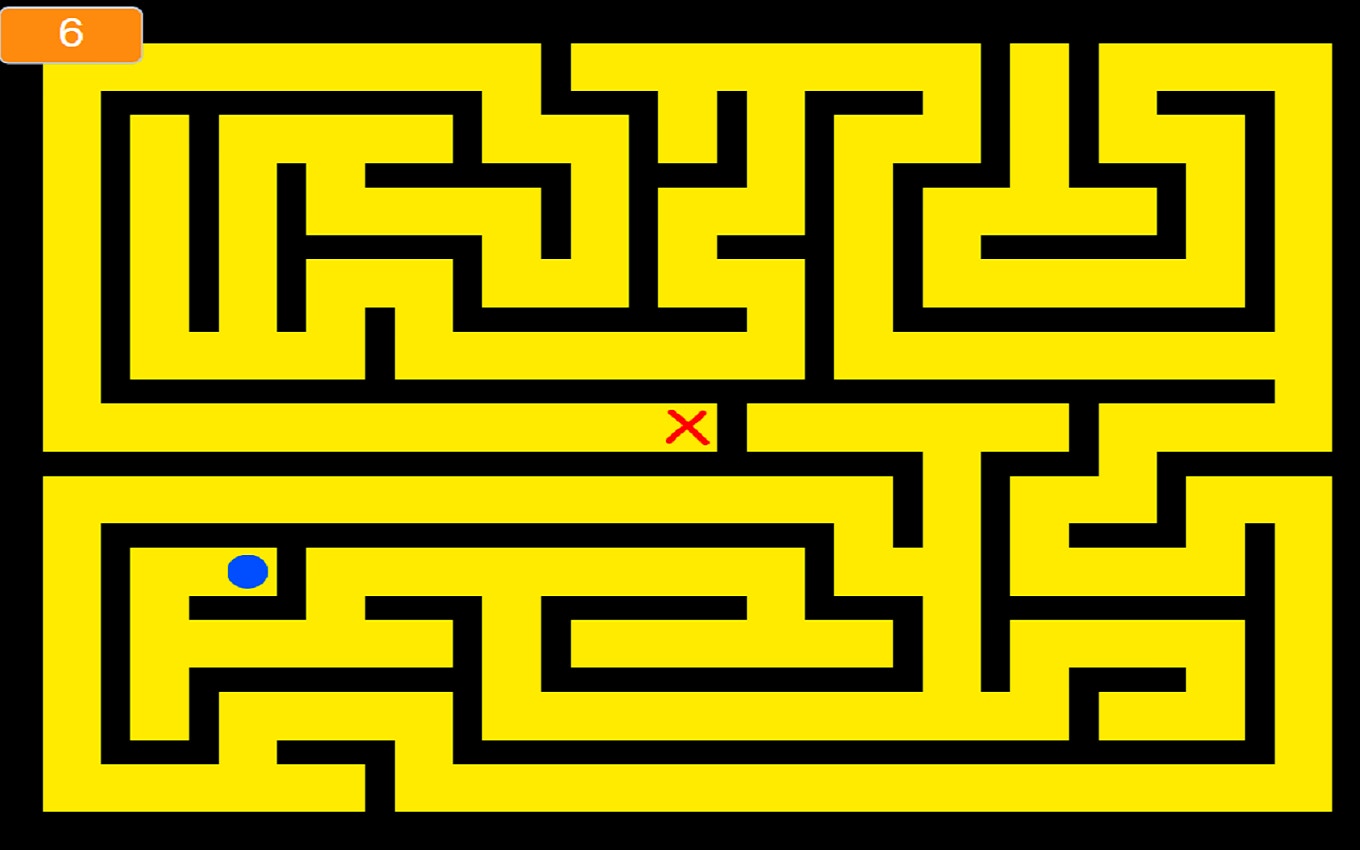
TL;DR: 100 Seconds Labyrinth is a fast-paced puzzle game where you navigate twisting mazes against a strict 100-second timer. Quick reflexes and sharp spatial awareness matter more than deep strategy. It's tense, satisfying, and perfect for short breaks, though the difficulty can spike unexpectedly. If you enjoy pressure puzzles, you'll find a lot to like here.
I stumbled onto this game during a slow Tuesday afternoon, looking for something quick to fill a coffee break. The name caught my eye: 100 seconds, that's not much time. Could a maze puzzle really work in under two minutes? I clicked through, expecting a casual diversion. What I got was a surprisingly tense little challenge that had me leaning closer to my screen, fingers tapping faster than I planned. After my first session, I realized this wasn't just a throwaway browser game. It had hooks in me.
What is 100 seconds Labyrinth?
100 Seconds Labyrinth is a browser-based puzzle game that drops you into intricate mazes and gives you exactly 100 seconds to find the exit. Each level presents a new labyrinth layout, and you must drag or swipe to shift your perspective, spot the correct path, and guide your marker to the goal before time expires. The game lives on more puzzle games section of FileReadyNow, a free gaming site.
The core loop is simple: see maze, solve maze, beat clock. But the execution makes it feel urgent. The timer isn't a gentle suggestion. It counts down relentlessly, and watching those seconds tick away while you're stuck at a dead end creates real pressure. Unlike turn-based puzzle games where you can ponder moves, this one demands snap judgments. If you've played something like Where's My Water? or the time-trial modes in Cut the Rope, the frantic energy will feel familiar. But here, the challenge is purely navigational. No physics tricks, no character abilities. Just you, the walls, and the clock.
How do you play 100 seconds Labyrinth?
You navigate the maze by clicking or tapping to move through corridors, shifting the view as needed to reveal hidden pathways. The goal is always the exit marker, and you have 100 seconds to reach it. That's the entire rule set. No power-ups, no checkpoints, no second chances. Miss the time limit, and you restart the level from scratch.
On my third try, I noticed something important: the perspective shifts aren't just cosmetic. Some paths only become visible when you rotate the view a certain way. The game uses a flat, top-down style but plays with angles, so a corridor that looks blocked from one direction might actually be open when you tilt the view. This took me a few failed runs to internalize. Early levels ease you in with straightforward layouts, but by level 5 or 6, the mazes start introducing false exits and looping paths designed to waste your seconds. My advice: don't commit to a direction until you've scanned the full layout. Those first 10 seconds spent surveying the maze pay off more than rushing headlong into a dead end.
Tips that actually work after playing for an hour
I spent a solid hour with this game, and some patterns emerged that generic advice won't catch. Here's what genuinely helped me improve:
- Scan the edges first. Exits often sit near the perimeter. If you start from the center and work outward, you'll waste precious seconds. Check corners and edges in the first 5 seconds.
- Rotate early, rotate often. The view-shift mechanic isn't a gimmick. Some corridors only reveal themselves at specific angles. Make it a habit to spin the perspective before you move.
- Learn dead-end patterns. After a while, you'll recognize maze shapes that loop back on themselves. Tight clusters of walls near the center are almost always traps.
- Don't retrace steps. If you hit a dead end, don't slowly back out. Reset your mental map and take a completely different branch. The timer punishes hesitation more than wrong turns.
Is 100 seconds Labyrinth good for quick gaming breaks?
Yes, this game is nearly perfect for short breaks. Each attempt lasts 100 seconds max, so even if you fail, you've only spent a couple of minutes. There's no commitment, no save system to worry about, and no narrative to follow. You can play 100 seconds Labyrinth between meetings, while waiting for a download, or during any small pocket of downtime.
The flip side is that the game doesn't offer much depth beyond the core loop. If you're looking for progression systems, unlockables, or a story, this isn't it. The satisfaction comes purely from beating your own time and clearing increasingly tricky layouts. For a 5-minute mental reset, it nails the brief. For a long, immersive session, you'll want something with more layers. Check the browse our games library page if you need variety.
What the experience actually feels like
What surprised me most was the physical tension. I didn't expect a browser maze to make my shoulders tighten up, but around the 30-second mark on harder levels, that's exactly what happened. The timer sound is subtle but effective: a soft tick that accelerates as you approach zero. It's not annoying, just insistent enough to keep you honest.
The controls are responsive. I played on both a laptop trackpad and a touchscreen, and the tap-to-move input worked cleanly on both. No sticky hitboxes, no accidental wrong turns blamed on the interface. That said, the difficulty curve has a few sharp teeth. Level 4 felt manageable, level 5 was a moderate step up, and then level 7 flattened me three times in a row. The jump isn't gradual; it's more like a staircase with a missing step. If you frustrate easily, that spike might push you away. But if you enjoy the sting of a near-miss and the drive to try one more time, it's oddly compelling.
Who should skip this one
If you prefer methodical, turn-based puzzles where you can plan every move without a clock ticking, 100 Seconds Labyrinth will probably stress you out more than it entertains. The same goes for players who want rich visuals or audio. The presentation is functional, not flashy. Solid lines, basic colors, simple sound cues. It does the job, but it won't wow anyone looking for atmosphere. This is a mechanics-first experience, and if you're not on board with time pressure as the main ingredient, you'll bounce off quickly. For everyone else, start playing here and see if you can clear level 7 on your first try. I couldn't.
100 Seconds Labyrinth won't replace your favorite puzzle app, and it's not trying to. What it delivers is a clean, honest challenge that respects your time and tests your spatial reflexes. The 100-second constraint is the star of the show. It transforms a simple maze into a miniature adrenaline shot. I came back to it several times over the week, chasing that feeling of beating a level with single-digit seconds left. That's the mark of a well-tuned browser game: it gives you a specific, repeatable thrill and doesn't overstay its welcome. If you have two minutes and want to see how sharp your navigation instincts are, give it a shot. Then maybe explore more puzzle games on the site when you're hungry for a different flavor.
Frequently Asked Questions
Do I need to download anything to play 100 Seconds Labyrinth?
No downloads required. The game runs entirely in your browser on the FileReadyNow site. Just visit the play page and it loads instantly.
Can I play 100 Seconds Labyrinth on my phone?
Yes, the game works on mobile browsers. The touch controls are responsive, and the 800x600 landscape layout fits phone screens reasonably well when tilted horizontally.
How many levels does 100 Seconds Labyrinth have?
The game cycles through a series of increasingly complex mazes. There isn't a fixed endpoint; the difficulty keeps escalating until you run out of time or skill. It's designed for replayability rather than completion.
What happens if I don't reach the exit in 100 seconds?
You fail the level and must restart it from the beginning. There are no partial checkpoints or time extensions. The timer hitting zero means an immediate reset.
Is 100 Seconds Labyrinth suitable for kids?
Absolutely. The controls are simple, there's no violent or inappropriate content, and the puzzles help develop spatial reasoning. Younger kids might find the time pressure frustrating, so it's best for ages 8 and up who enjoy a challenge.
Table of Contents
Recent Posts
Surviving the Meme Monster: OBUNGA Game Review
8 hours ago
Surviving the Chilling Horrors of a Gothic Manor
8 hours ago
Audio Trimmer Online Free: Cut, Keep, or Remove Any Section
1 day ago
Get Ready to Ride: Skateboard Wheelie Review
1 day ago
Fun Shopping Fun: Review of Funny Shopping Supermarket
1 day ago
Racing to Fun: A Look at Super Star Body Race
2 days ago