7x7 Ultimate Review: A Fresh Spin on Match-3 That Gets Tense
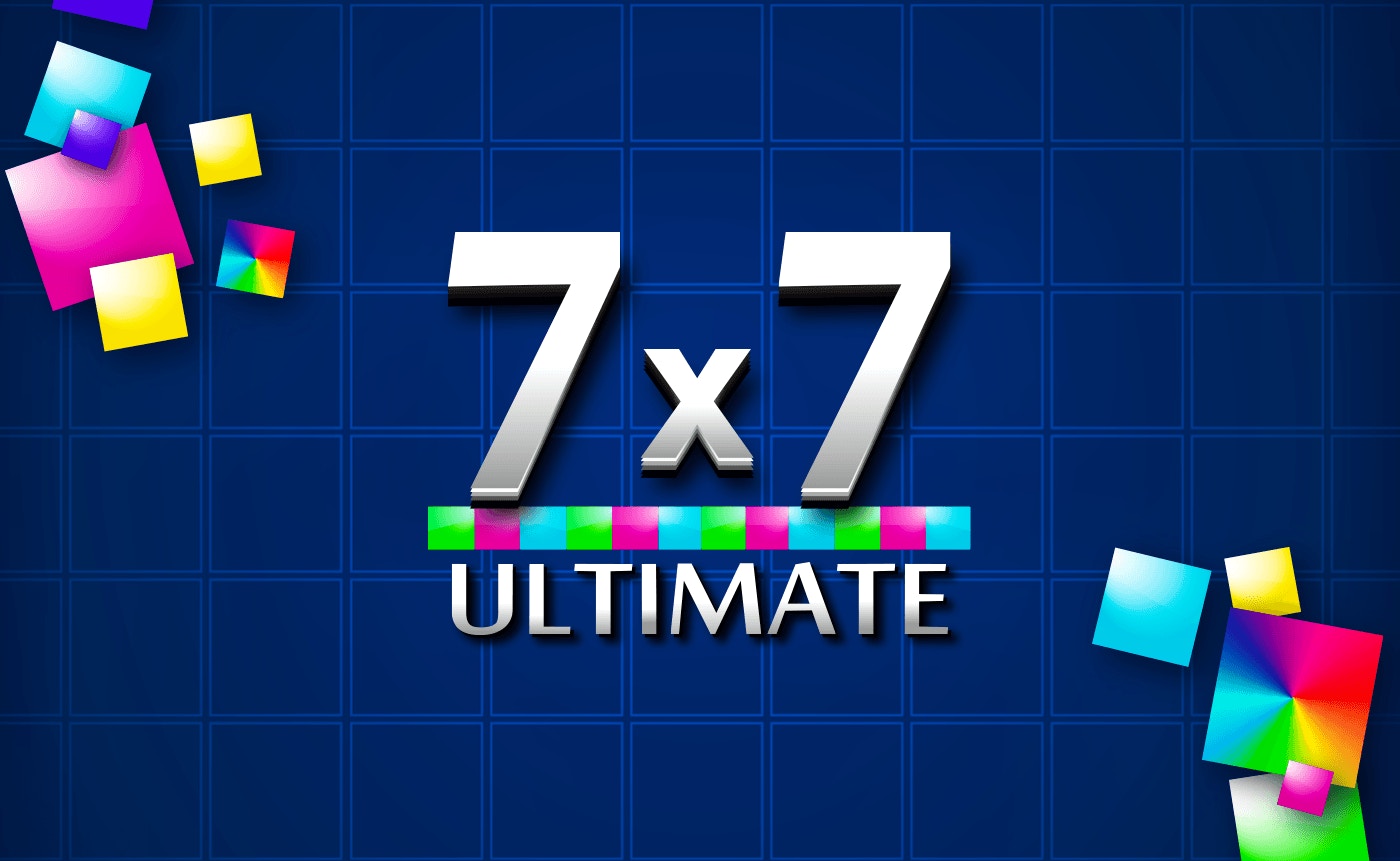
TL;DR: 7x7 Ultimate is a match-3 puzzle game where you slide rows and columns to line up four blocks of the same color. Every non-matching move adds more blocks, so the pressure builds fast. It's simple to learn but gets tricky quickly. If you enjoy spatial puzzles and tense, single-player strategy, play 7x7 Ultimate for a clever twist on a classic genre.
I opened this game expecting another Candy Crush clone. I was wrong. The first thing that hit me was the silence: no flashy explosions, no peppy music. Just a clean 7x7 grid and a quiet sense of dread. You don't swap two tiles. You slide an entire row or column, shifting everything by one space. That's the hook. It feels more like solving a Rubik's Cube than popping candy. After my first session, I blinked and realized twenty minutes had vanished. The game doesn't shout for your attention, it just quietly dares you to survive one more move.
What is 7x7 Ultimate?
7x7 Ultimate is a minimalist puzzle game that blends match-3 mechanics with sliding tile strategy. You shift rows and columns on a 7x7 grid to create lines of four or more matching blocks. The twist is that every move that doesn't form a match spawns three new blocks in random empty spaces. The goal is simple: keep the board clear and avoid filling it up completely. It's a browser game you can play instantly, no download needed.
If you've played Threes or 2048, you'll recognize the DNA here. The game borrows the spatial tension from those titles but applies it to color matching. The grid starts mostly empty, giving you room to breathe. Within a dozen moves, things tighten up. You start planning two or three moves ahead, trying to set up cascading clears. When a row slides and a match clicks into place, the blocks vanish with a satisfying little pop. It's understated but rewarding.
How do you play 7x7 Ultimate?
You slide any row left or right, or any column up or down, by one space. The block that slides off one edge wraps around to the opposite side. If that shift creates a horizontal or vertical line of four or more same-colored blocks, they disappear and you earn points. If the move doesn't create a match, three new blocks appear in random empty cells. The game ends when the grid has no empty spaces left.
Controls are straightforward. On desktop, you click and drag a row or column. On mobile, you swipe. It took me a few tries to get the swipe sensitivity right: short, deliberate swipes work better than long flicking motions. I accidentally shifted the wrong row more than once early on. The wrap-around mechanic is key. Blocks that slide off the edge reappear on the other side, which lets you set up matches that look impossible at first glance. Mastering that wrap-around is where the real strategy lives.
Tips That Actually Work
After losing badly on my third try, I started experimenting. Here's what made a difference.
First, prioritize clearing space over scoring big combos. A flashy six-block line feels great, but if it leaves you with scattered singles, the next few moves will punish you. A modest four-block clear that opens up the center of the board is often the smarter play. Second, watch the color distribution. If you have six red blocks clustered on one side, don't break them apart. Slide the row that brings them together. Third, use the wrap-around deliberately. If a needed color is stuck on the far left, slide the row right so it pops out on the left side where you want it. That trick saved me more times than I can count.
One habit I had to break: don't chase a match that requires three setup moves. The board changes too fast. If you can't make a match in one or two slides, clear something else and let the new blocks reshuffle your options. Patience is a trap here. Decisive, small wins keep you alive longer than elaborate plans.
Is 7x7 Ultimate good for a quick break?
Yes, it's nearly perfect for short sessions. A single round can last anywhere from two minutes to ten, depending on your luck and skill. There are no levels, no timers, no lives system. You can jump in, play until you lose, and walk away. The portrait orientation and 600x800 size make it comfortable on a phone screen during a commute or while waiting in line. No ads interrupted my gameplay on the browser version, which is a genuine relief.
That said, the game can be hard to put down. The tension ramps smoothly, and the "just one more move" pull is strong. I planned to play for five minutes and ended up losing half an hour. If you need a game with a natural stopping point, this doesn't have one. You stop when you lose. For a coffee break, it's ideal. For "I should be sleeping right now," it's dangerous.
What the Experience Actually Feels Like
The visual design is clean to the point of being sparse. Blocks are solid, distinct colors: no gradients, no animations beyond a subtle vanish effect. I appreciated this. On a small screen, clarity matters more than flair. The color palette is accessible, though I wished for a colorblind mode or pattern option. Telling the dark blue and purple apart in low light made me squint once or twice.
Sound is minimal. There's a soft click when blocks slide and a gentle pop when they clear. No music loop, which I found refreshing at first but slightly empty after longer sessions. I ended up putting on my own playlist. The game doesn't try to dazzle you. It respects your attention rather than demanding it. That's rare in free browser games, and I respect it.
One honest gripe: the difficulty curve is steep right after the first clear. You go from an open board to a crowded one in three or four bad moves, and there's no undo button. A single mis-swipe can end a promising run. I'd love a one-move undo, even if it cost points. Without it, the game sometimes feels punishing rather than challenging.
Who should skip this one?
If you want deep meta-progression, unlockable power-ups, or a story mode, 7x7 Ultimate won't satisfy you. There's no leveling system, no characters, no boosters to collect. It's a pure, single-mechanic puzzle. Fans of games like Gardenscapes or Homescapes, where matching fuels a larger narrative, might find this too bare. It's also not a multiplayer or competitive game. The only opponent is the board itself.
But if you love elegant constraints and the satisfaction of clearing a board through pure planning, this hits the spot. It's closer to a chess puzzle than a slot machine. No RNG loot boxes, no energy timers. Just you and a grid that gets meaner every turn. For fans of minimal strategy games, more match-3 games in this vein are worth exploring.
After a week of dipping in and out, I keep coming back. The game has that rare quality where losing feels like your fault, not the algorithm's. When the board fills up and the game ends, I always see the move I should have made. That's good design. It's not flashy, but it's fair. And in a genre full of glitter and timers, fair feels fresh.
If you want a puzzle that respects your brain and doesn't waste your time, start playing here. You can also browse our games library for more free titles that run right in your browser. ▶
Frequently Asked Questions
Do I need to download anything to play 7x7 Ultimate?
No, it runs entirely in your browser. Just visit the play page and start sliding. It works on desktop and mobile without any app install.
How does scoring work in 7x7 Ultimate?
You earn points for every block cleared. Longer lines of matching blocks give higher scores. The exact multiplier isn't shown, but clearing six or seven blocks at once noticeably boosts your total.
Can I undo a move if I make a mistake?
Unfortunately, no. Once you slide a row or column, the move is permanent. This makes careful swiping essential, especially on a crowded board.
What happens when the grid fills up completely?
The game ends immediately. There's no continue option or second chance. You'll see your final score and can start a new round with a fresh empty grid.
Is 7x7 Ultimate similar to 2048?
It shares the sliding mechanic and the spatial planning aspect, but instead of merging numbers, you're matching colors to clear them. The pressure of filling the board feels very similar to 2048's endgame tension.
Table of Contents
Recent Posts

Car Driving Review: Taming the Urban Jungle on 4 Wheels
14 minutes ago
The Right Color Review: A Stroop Test That Tricks Your Brain
44 minutes ago
Color Tower Review: A Stacking Game That Tests Your Nerves
1 hour ago
Endless Sprunki Review: A Tiny Arcade Game That Sticks
1 hour ago
Crazy Gravity Review: A Shifting Arcade Challenge That Hooks You
1 hour ago
Scary Doll Review: Can You Outwit a Vengeful Porcelain Doll?
1 hour ago