PDF to JPG Blurry? How to Convert a PDF Page With Sharp Text

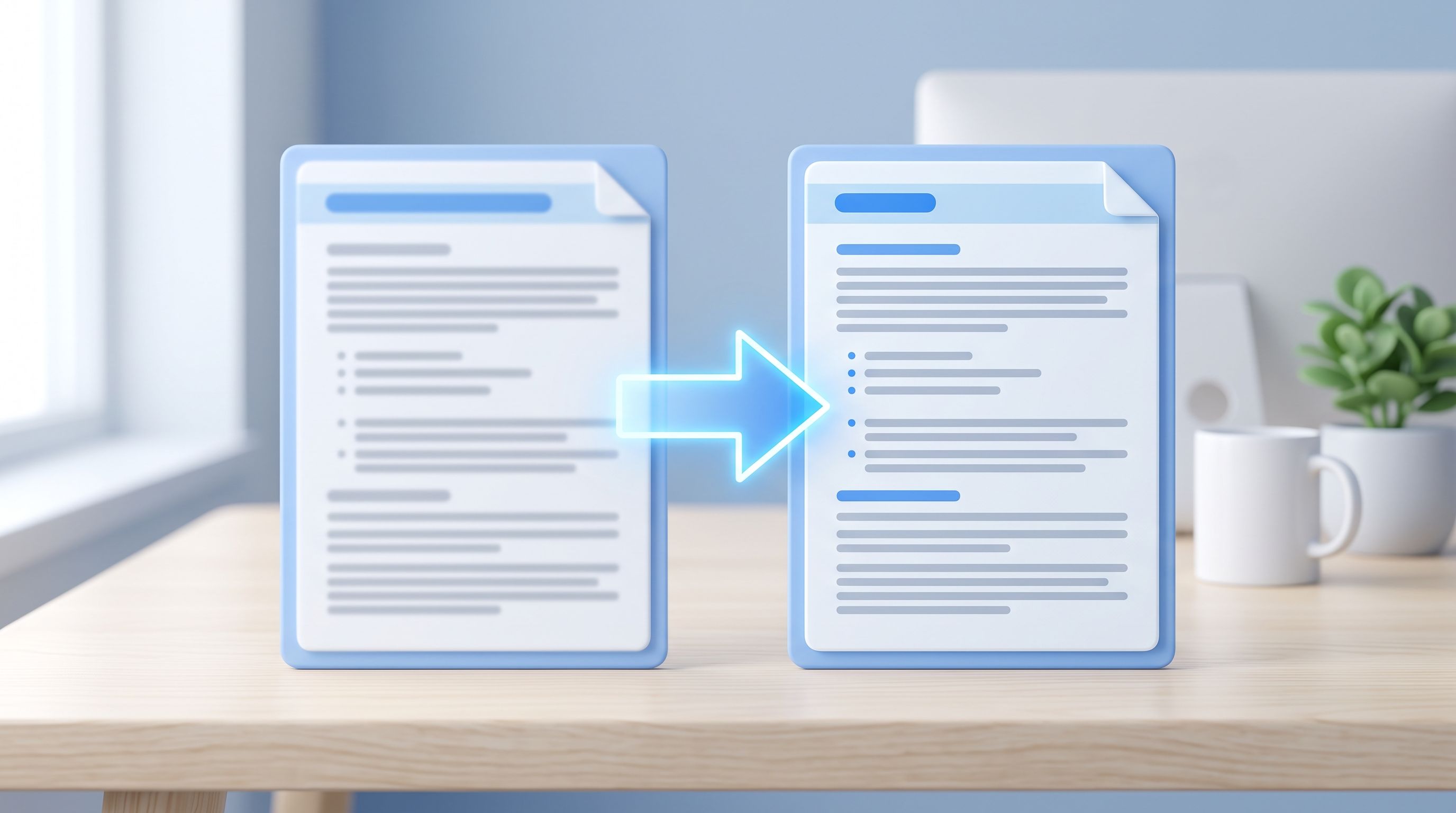
A government upload form once told me it would only accept JPG files for a supporting document. My document was a three-page PDF. I didn't want to install software for one small task, so I ran it through FileReadyNow's PDF to Image converter, chose JPG, and had three numbered images in a ZIP a few seconds later. The form accepted them on the first try.
PDF to JPG is the easy part. What trips people up is what comes next: getting only the page you need, and getting text that looks sharp instead of blurry. Here is how to do both.
How to Convert a PDF Page to JPG Online for Free
Upload the PDF, choose JPG, and click Convert to Image. The tool turns every page into its own image and downloads them together as a ZIP.
The steps in order:
- Drop your PDF into the upload box, or click to browse. You can add up to 10 PDFs at a time, up to 100 MB in total.
- Choose JPG or PNG as the output format.
- Click Convert to Image.
- Open the ZIP when it downloads. Each page is a separate file, numbered in page order.
There is no signup and no watermark on the images.
How Do You Convert Just One Page of a PDF?
The converter works on whole PDFs, so you have two simple options. For a short PDF, convert all of it and keep the page you need from the ZIP, since the files are numbered in page order. For a long PDF, pull the page out first with Extract PDF Pages, then convert that one-page PDF.
Extracting first saves time on big files. The conversion runs on your own device, so a 200-page PDF takes noticeably longer than a three-page one, and there is no reason to render 199 pages you will never use.
Why Is My PDF to JPG Blurry?
Two things happen at once. Text in a PDF is usually stored as vectors, which stay sharp at any zoom. Once the page becomes an image, that text turns into a fixed grid of pixels, so zooming in far enough shows the edges of the grid. On top of that, JPG was built for photographs. It shrinks files by throwing away fine detail, and the places it struggles most are sharp edges, which is exactly what text is. The result is faint smudges around the letters, most visible on small type, tables, and thin lines.
There are three common causes, and they have different fixes:
- The format: switch to PNG. It keeps every pixel, so text stays crisp.
- A scanned PDF: a scan is already a photo of a page, so the conversion cannot add sharpness the scan never captured. Start from the original digital file if you have it.
- Re-compression after conversion: messaging apps and social platforms squeeze images again. More on that below.
JPG or PNG: Which Should You Pick for a PDF Page?
| Situation | Pick |
|---|---|
| Page with small text, tables, or diagrams | PNG |
| Photo-heavy page, brochure, or portfolio | JPG |
| Upload form with a strict size limit | JPG |
| Slide or page you plan to zoom into or edit | PNG |
| Form or platform that only accepts JPG | JPG |
When in doubt, try PNG first. For a text-only page, a PNG is often close to the size of a JPG, and sometimes smaller, because large areas of flat color compress well in PNG. If a PNG comes out too large for an upload limit, run it through the Image Compressor or switch that page to JPG.
What Resolution Will the Image Be?
The converter renders each page at a high resolution, which suits slides, web pages, and everyday sharing. It has no DPI or JPG quality setting to adjust. The only choice on the page is JPG or PNG, which makes PNG your main lever for sharp text. If you plan to print, check the pixel size before you rely on it. An A4 page printed at 300 DPI needs roughly 2,480 by 3,508 pixels. Open the image's properties to see what you got.
No converter can add detail that was never in the PDF. A low-resolution scan stays low resolution as a JPG, and a page with sharp vector text will look as good as the pixel size allows.
Why Does the Image Look Worse After I Send It on WhatsApp or Instagram?
Because those apps compress images again. A crisp page image gets squeezed a second time, and small text suffers most. On WhatsApp, attach the file as a Document instead of a photo, and it is sent untouched. Instagram recompresses everything you post, so keep text large and avoid fine print.
Instagram is also a common reason to convert in the first place, since it takes images and not PDFs. Converting a slide deck page by page gives you a file for every carousel slide. Check the page shape against the post format first, because a tall document page can be cropped.
Can I Convert a PDF to JPG on My Phone?
Yes. The converter runs in a mobile browser, so the steps are the same on iPhone and Android. Upload the PDF, pick the format, and convert. When the ZIP downloads, tap it in your Files app to unzip it, then open the page images from there.
Is It Safe to Convert a Private PDF?
The upload box states that your file never leaves your device and is processed entirely in your browser, and no account is needed. That is the property that matters for a contract, an ID scan, or a medical form.
If the PDF is password-protected, the converter may not be able to open it. Remove the password first with Unlock PDF, then convert.
What Do People Actually Use This For?
- Upload forms that reject PDFs: visa, job, and government portals that only take JPG or PNG.
- Presentations: drop a chart or diagram from a PDF report into PowerPoint, Keynote, or Google Slides.
- Social posts: turn document pages into images for platforms that do not accept PDFs.
- Cover images: use page one of a PDF as a preview before someone opens the full file.
- Tablet reading: convert lecture slides or notes into images that are easier to annotate on a phone or tablet.
One trade-off: once a page is an image, its text can no longer be selected, searched, or copied. If you need editable text, use PDF to Word instead. And if you ever need to go the other way, JPG to PDF turns images back into a PDF.
Do I Need an Account to Use This Tool?
No. There is no signup and no watermark. Upload your PDF, pick a format, and download the images.
Frequently Asked Questions
Is the PDF to JPG converter free?
Yes, with no signup and no watermark.
Is JPG the same as JPEG?
Yes. They are the same format. The only difference is the file extension, and most programs treat them identically.
Do I get one image for each page?
Yes. Each page becomes its own image, numbered in page order, and all of them download together as a ZIP.
How many PDFs can I convert at once?
Up to 10 PDFs at a time, up to 100 MB in total.
Which format keeps text the sharpest?
PNG. JPG can leave faint smudges around small text because it discards fine detail to make the file smaller.
Can I set the DPI or JPG quality?
No. The only option is JPG or PNG, so choose PNG when sharp text matters.
Why does my PDF look sharp but the JPG looks soft?
PDF text is stored as vectors that stay sharp at any zoom. In a JPG it becomes a fixed grid of pixels, and JPG compression softens the edges further. PNG avoids the compression part.
Can I still copy the text after converting?
No. The page becomes a picture, so the text cannot be selected or searched. Use PDF to Word if you need editable text.
Can I turn the images back into a PDF?
Yes, with the JPG to PDF tool.
Conclusion
Converting a PDF page to an image takes a few seconds. Getting a good result comes down to two choices: pick PNG when the page has small text, and start from the original file instead of a scan whenever you can. FileReadyNow's PDF to Image converter gives you both formats, numbered pages, and a single ZIP, with no software to install. The next time a form or an app refuses your PDF, convert the pages and move on.
Table of Contents
Recent Posts
Retro Speed: A Thrilling Racing Fix for Busy Days
3 hours ago
Arcade Thrills in Pixels: Steve Adventurecraft Review
3 hours ago
Surviving the Desert: A Fun Idle Adventure
1 day ago
Balloon Smash: Casual Fun with a Thorn Twist
1 day ago
Hidden Object Puzzle Fun with Grimace Shake
2 days ago
Summer Fun in Your Pocket: Fun Summer Holiday Review
3 days ago