Tank 1990 Review: A Modern Pixel-Shooter That Hits Hard
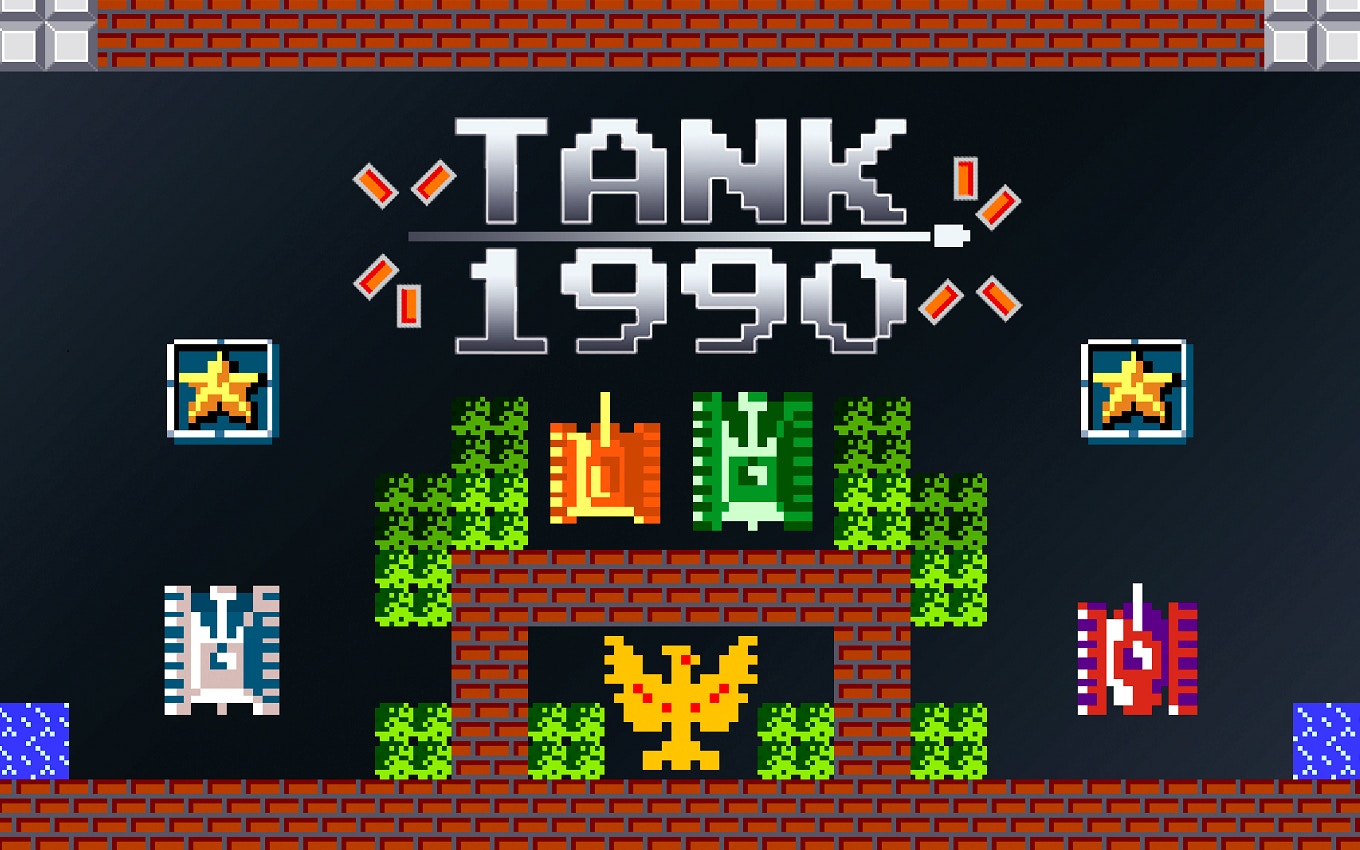
TL;DR: Tank 1990 is a free browser-based arcade shooter where you defend your base from waves of enemy tanks. It mixes classic pixel graphics with smooth controls, a level editor, and local multiplayer. Perfect for quick sessions, though solo play can get repetitive after a while. If you miss old-school top-down tank battles, this one scratches that itch.
I stumbled onto Tank 1990 while looking for something simple to kill 15 minutes. You know the feeling: you want a game that loads instantly and doesn't demand a tutorial. This one delivered. Within seconds, I was rolling a green pixel tank across a brick maze, blasting red enemies before they could reach my base. It felt like finding an old NES cartridge, except it runs right in your browser.
The game doesn't try to reinvent the wheel. It takes the classic top-down tank formula, polishes it up, and adds a few smart modern touches. After a few rounds, I was hooked enough to try the level editor and drag a friend into multiplayer. Some parts surprised me, and one or two things bugged me. Let's break it all down.
What is Tank 1990?
Tank 1990 is a browser-based arcade game that revives the classic top-down tank shooter genre. You control a tank, protect your base, and destroy waves of enemy tanks across brick-walled battlefields. It includes a built-in level editor and supports local multiplayer for two players on the same keyboard.
The original Tank 1990 (also known as Battle City) was a 1985 NES title that defined couch co-op for a generation. This web version keeps the core loop intact: enemies spawn from three points on the map, and you lose if they destroy your base or you run out of lives. What's new here is the modern coat of paint, smoother movement, and the ability to play Tank 1990 without downloading anything. The pixel art is clean but faithful. It's nostalgia done right, not a lazy reskin.
How do you play Tank 1990?
You move your tank with the arrow keys and shoot with the spacebar. Your goal is to destroy all enemy tanks on the map before they destroy your base, which sits at the bottom of the screen. Each level introduces more enemies, faster tanks, and trickier layouts. You have limited lives, so reckless rushing gets punished fast.
I learned this the hard way on level 3. I pushed too far into the top lane, and a speedy red tank slipped past me along the left wall. My base was gone before I could turn around. That moment taught me the real game here: positioning. You're not just shooting, you're controlling lanes and predicting spawn routes. Brick walls can be shot through to create new paths, which adds a light tactical layer. The controls feel responsive, though the tank's movement has a slight grid-snap feel that takes a few minutes to get used to. After my first session, I was deliberately carving sightlines through walls to set up ambushes.
Tips That Actually Work in Tank 1990
Don't camp near your base. It feels safe, but it gives enemies too much room to maneuver. Push up to mid-map and control the choke points where brick corridors narrow. You'll catch enemies in bottlenecks where they can't dodge.
Use the walls. Shooting through bricks isn't just for shortcuts. Create firing lanes that let you cover two spawn points from one position. On maps with dense brick clusters, I'll carve a horizontal line across the center early in the round. It lets me slide left and right while keeping a clear shot at incoming tanks.
In multiplayer, split responsibilities. One player holds the center, the other patrols the flanks. Don't both chase the same target. Communication is quick: "left side clear" or "two coming top" is all you need. My co-op partner and I lost three rounds before we figured out that overlapping fire zones mattered more than individual kill counts.
Is Tank 1990 good for quick gaming breaks?
Yes, it's ideal for short sessions. A single round lasts two to five minutes. The game loads instantly in a browser tab, has no ads interrupting gameplay, and doesn't require an account. You can play one round and walk away, or chain several levels together if you have more time.
I've been keeping it open in a pinned tab during work breaks. The simplicity is the strength here. No cutscenes, no loading screens, no battle passes. Just click and shoot. If you need a mental reset between tasks, this fits the slot perfectly. The difficulty curve is gentle enough that you won't feel frustrated after a loss, but sharp enough that you stay engaged. Compare it to something like more tanks games in the same category, and this one stands out for its pick-up-and-play speed.
The Level Editor and Multiplayer: Where It Gets Interesting
The built-in level editor is the feature I didn't expect to care about, but ended up using the most. You place bricks, steel walls (which can't be destroyed), trees, and water tiles on a grid. In under two minutes, I built a map with a narrow kill corridor that funneled enemies into a single-file death trap. It worked, and watching the AI struggle through my cruel design was deeply satisfying.
Multiplayer is local only, meaning two players share one keyboard. Player one uses arrow keys, player two uses WASD. It's a bit cramped if you're both on a laptop keyboard, but on a desktop with some space, it's fine. The co-op dynamic changes the whole feel. Suddenly you're covering each other, calling out threats, and blaming each other when the base explodes. It's the kind of couch co-op that's rare in browser games. If you want to explore what else is out there, you can browse our games library for more multiplayer options.
What Tank 1990 Gets Right, and One Thing It Doesn't
The hit detection is generous in a good way. Shots connect when they look like they should. Enemy AI is predictable but not brainless: faster tanks will try to flank, and some levels spawn enemies from directions that force you to reposition. The sound design is chunky and satisfying, with a bassy thump on each shot.
My one honest gripe: solo play gets samey after about 20 minutes. The enemy types don't vary much beyond speed and armor differences. Once you've mastered the positioning rhythm, the challenge plateaus. The level editor and multiplayer pick up the slack, but if you're strictly a solo player looking for deep progression, this might not hold you for long sessions. It's a burst-play game, not a marathon. If you want something with more strategic depth, explore the tanks category for alternatives. But for a free, no-fuss arcade fix, it delivers exactly what it promises.
After a week of dipping in and out, Tank 1990 earned a permanent spot in my quick-games rotation. It respects your time, runs flawlessly in a browser, and the level editor gives it legs beyond the core campaign. The local co-op is a genuine treat if you have someone nearby to share a keyboard with.
Is it the deepest tank game out there? No. But it nails the feel of the 1985 original while adding just enough modern convenience. If you have five minutes and want to blow up pixel tanks, start playing here. ▶
Frequently Asked Questions
Is Tank 1990 free to play?
Yes, Tank 1990 is completely free. It runs in your web browser with no downloads, no account creation, and no in-game purchases. You just visit the page and start playing immediately.
Can I play Tank 1990 on my phone?
The game is designed for landscape orientation at 800x600 resolution, so it works best on desktop or tablet. On smaller phone screens, the controls and visuals may feel cramped. A keyboard is recommended for the best experience.
Does Tank 1990 have online multiplayer?
No, the multiplayer is local only. Two players share the same keyboard: Player 1 uses arrow keys and spacebar, Player 2 uses WASD and F to shoot. There is no online matchmaking or remote co-op.
How many levels does Tank 1990 have?
The game includes a set of pre-built levels that increase in difficulty as you progress. Beyond that, the built-in level editor lets you create and play your own custom maps, giving the game effectively unlimited replay value.
What are the different enemy types in Tank 1990?
Enemy tanks vary mainly in speed and armor. Basic red tanks are standard, while faster variants can outmaneuver you and heavier armored types take multiple hits to destroy. Recognizing which type is spawning helps you prioritize threats.
Table of Contents
Recent Posts
Audio Trimmer: Cut MP3, WAV & More Free Online | FileReadyNow
46 minutes ago
Base64 to Image Converter: Decode Strings to PNG/JPG
48 minutes ago
Image to Base64 Converter: Free, Instant, Browser-Based
49 minutes ago
Online Regex Tester: Test & Debug Regex Fast & Free
50 minutes ago
Skibidi Toilet Math Challenge: A Spooky Brain Workout
2 hours ago
Noob vs Hacker Review: A Pixel Desert Dash Worth Playing
2 hours ago