Meta Launches Muse Spark 1.1 and Opens Public Preview of Its New Model API

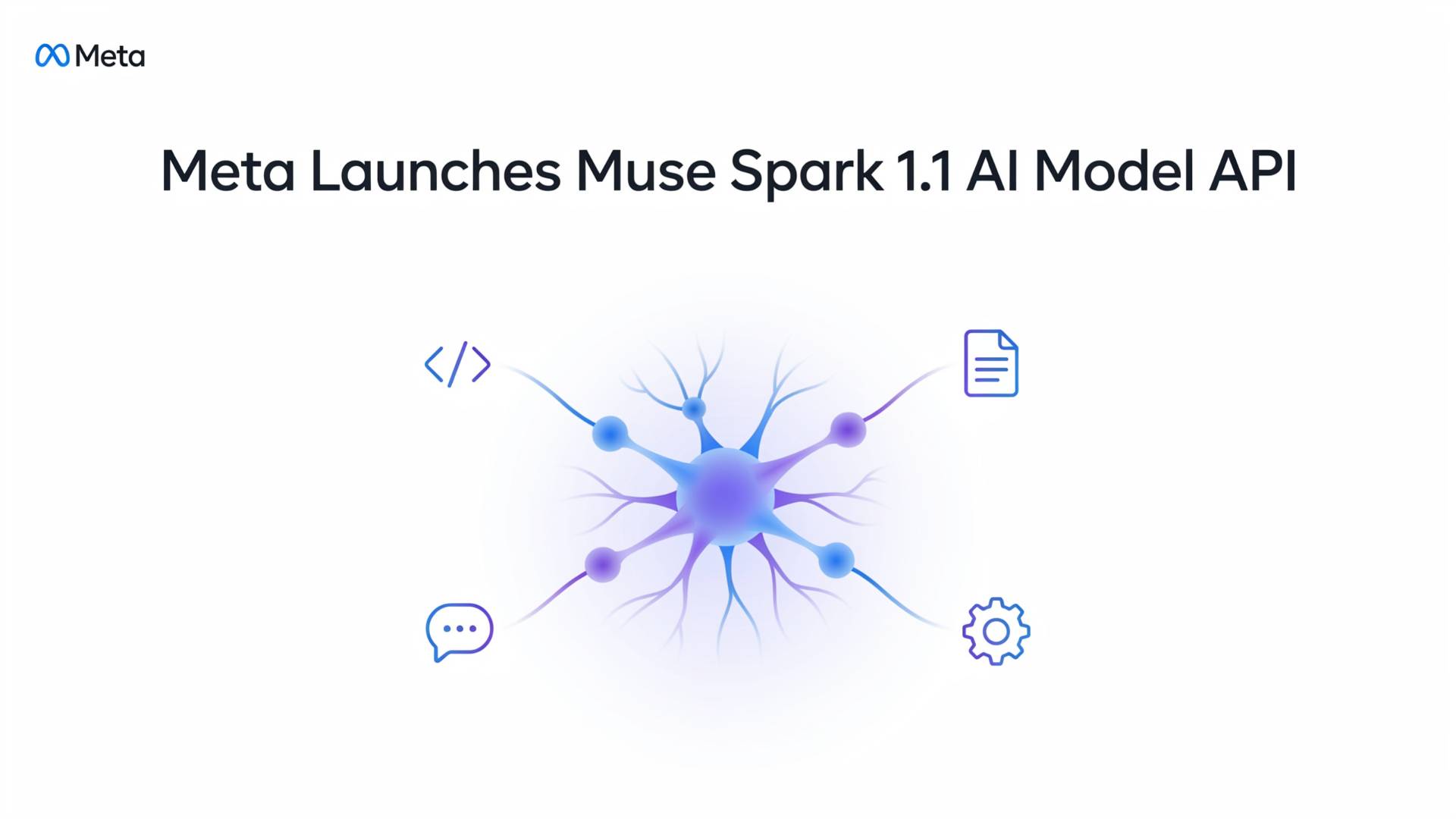
Meta has just rolled out Muse Spark 1.1, an upgraded AI model built to handle real agentic work think multi-step tool use, coding, and computer navigation, rather than just answering questions in a chat window.
Alongside the model, Meta also opened a public preview of its new Meta Model API, giving outside developers their first real shot at building on top of Muse Spark.
If you've been following the recent wave of AI model API launches, this one is worth paying attention to. It's not a minor version bump, Meta is positioning Muse Spark 1.1 as a genuine step up in how AI models plan, delegate, and execute tasks across apps, browsers, and codebases.
What's Actually New in Muse Spark 1.1
At its core, Muse Spark 1.1 is a multimodal reasoning model, meaning it can process text, images, and video together rather than treating them as separate inputs.
Meta says the biggest gains are in three areas:
- Agentic task handling: The model can act as a "main agent" that plans a project and hands off pieces of it to parallel subagents, then pulls the results back together.
- Computer use: It can operate across multiple applications, adjust when the task changes mid-way, and decide on its own when to write a quick script versus just clicking through an interface.
- Coding on large codebases: The model can trace bugs back to their source, implement features in enterprise-scale systems, and handle large migrations, not just toy code snippets.
A Massive 1 Million Token Context Window
One detail that stands out for anyone working with large documents, long chat histories, or big datasets is Muse Spark 1.1's ability to actively manage a context window of up to 1 million tokens.
That means it can hold onto earlier steps in a long task, compress what's no longer critical, and still recall details from much earlier in a session.
This is a meaningful upgrade for workflows that involve processing or converting large batches of files, something regular visitors to our file conversion tools already care a lot about.
The New Meta Model API
For developers, the headline here is really the API.
Until now, Muse Spark wasn't available outside of Meta's own products. With this public preview, developers can access Muse Spark 1.1 directly through an OpenAI-compatible API, meaning teams that already have code built around similar API formats won't need a heavy rewrite to start testing it.
Early Feedback From Developers and AI Companies
Early partners were quick to weigh in on Muse Spark 1.1.
Replit CEO Amjad Masad called it "a complete agentic foundation," pointing to the combination of a massive context window, full multimodal support for images, video, and PDFs, built-in search with citations, and structured output in one package.
Cline CEO Saoud Rizwan highlighted the model's price-to-performance ratio for serious agentic coding work.
Box's VP of AI Products noted that Muse Spark 1.1 held up well against enterprise-grade evaluation benchmarks.
That PDF and document handling angle is particularly relevant if you regularly work with PDF tools or need to extract and reformat content from large files, it's an area where general-purpose chat models have historically struggled.
Safety Testing Before Release
Meta says it ran the model through its Advanced AI Scaling Framework before shipping.
The company tested Muse Spark 1.1 against several important categories, including:
- Chemical and biological risk
- Cybersecurity misuse
- Loss-of-control scenarios
According to Meta, Muse Spark 1.1 stayed within safe thresholds across all three categories.
The company also reported that the model showed better resistance to jailbreak attempts, prompt injection, and other adversarial attacks compared to earlier versions, along with lower rates of hallucination.
Where You Can Try Muse Spark 1.1
Muse Spark 1.1 is already live in "Thinking" mode inside the Meta AI app and on meta.ai, so anyone curious can test it without touching the developer API.
For teams building products, the Meta Model API preview is the more interesting door.
It opens the possibility of plugging Muse Spark's agentic and multimodal abilities directly into existing software, similar to how other AI tools have been layered into everyday apps over the past year.
Future of Meta Muse Spark Models
Meta has also teased that more capable models are already in training, so this release is likely a checkpoint rather than a final stop.
We'll keep tracking developments like this in our AI tools and updates section, especially anywhere they intersect with file processing, document conversion, or productivity workflows.
For the full technical breakdown and evaluation data, see Meta's original announcement on the Meta AI blog.
Frequently Asked Questions
What is Muse Spark 1.1?
Muse Spark 1.1 is Meta's upgraded AI model built for agentic tasks such as multi-step planning, coding, and computer use, in addition to standard multimodal reasoning across text, images, and video.
What is the Meta Model API?
The Meta Model API is a new public preview that lets outside developers access Muse Spark 1.1 directly through an OpenAI-compatible API, making it easier to integrate into existing applications without a major rewrite.
How big is Muse Spark 1.1's context window?
Muse Spark 1.1 can actively manage a context window of up to 1 million tokens, allowing it to retain details from earlier in long tasks or conversations while compressing less critical information.
Can Muse Spark 1.1 handle large codebases?
Yes. The model is designed to trace bugs to their source, implement new features in enterprise-scale systems, and support large code migrations, not just small code snippets.
Has Muse Spark 1.1 been safety tested?
Meta says the model was evaluated using its Advanced AI Scaling Framework across categories including chemical and biological risk, cybersecurity misuse, and loss-of-control scenarios, and stayed within safe thresholds in all three.
Where can I try Muse Spark 1.1?
Muse Spark 1.1 is available in "Thinking" mode inside the Meta AI app and on meta.ai, while developers can request access to the Meta Model API preview to build it into their own products.
Table of Contents
Recent News

GPT-6 Sol Explained: Pricing, 1M Context Window, Limits, and Who Should Use It
2 weeks ago
Title: Microsoft 365 Copilot Gets a New Prompt Button Inside Word, Excel, and PowerPoint
2 weeks ago
Gemini 3.8 Flash Is Here: Same Price, Stronger Reasoning, and Better PDF Handling
1 month ago
Apple OpenAI Lawsuit Escalates as Both Sides Clash Over Confidential Data
1 month ago
ChatGPT Gets Major File Updates: Voice Uploads, Google Drive Sync, and Better
1 month ago
Adobe Acrobat Now Works Inside WhatsApp and ChatGPT, Bringing PDFs Straight Into Chat
1 month ago