Meta Rolls Out Muse Image, Its First AI Image Generator Built Into Meta AI

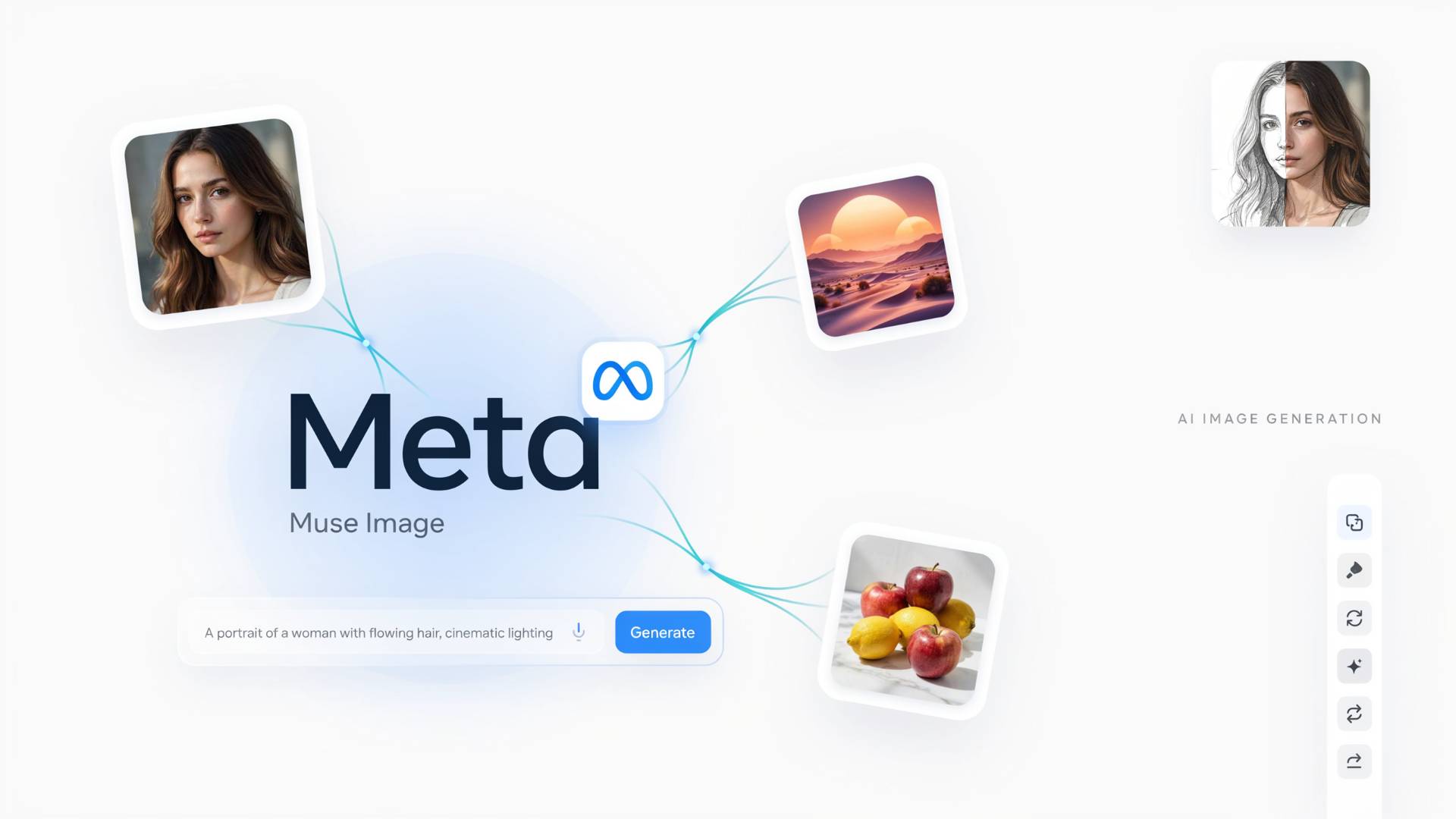
Meta has begun rolling out Muse Image, a new AI-powered image generation tool built by Meta Superintelligence Labs and now lives inside Meta AI. Unlike a standalone image generator, Muse Image is being positioned as a creative assistant that already understands a user's photos, interests, and social context, turning plain-language requests into finished visuals that can be shared straight to a chat, story, or feed.
The launch follows April's debut of Muse Spark, the conversational model that first gave Meta AI its sharper reasoning skills. Muse Image builds on that foundation, pairing language understanding with image generation so that a request is typed in casual English.
Examples like "put me in front of the Eiffel Tower" or "clean up this old family photo" can be handled without any technical prompt engineering.
What the Tool Actually Does
Meta says the model can restore damaged or low-quality photos, generate clean and legible text inside graphics (useful for things like infographics or how-to guides), and even build basic functional QR codes from a written prompt.
It also supports photo editing tasks such as removing an unwanted person from the background of a shot or blending multiple images, say, a selfie and a vacation photo, into one composite.
To help people get started, Meta AI now ships with a presets panel: tap-to-use prompts that can turn a photo into a claymation-style portrait, a 16-bit video game character, a restored vintage photograph, or a handful of other stylized looks.
Users can also mark up an image directly, circling or sketching over a photo to request a specific change, and the assistant remembers the conversation so edits can keep building on each other instead of starting over.
Room Redesigns and Social Tagging
One of the more practical features lets users photograph a room and ask Meta AI to redesign it using real, purchasable furniture and décor pulled from the web or Facebook Marketplace.
There's also a social layer: users can @-mention Instagram accounts inside Meta AI to pull public photos from that profile into a generated image, handy for things like event invites or collaborative graphics.
Meta notes that account holders can switch this tagging permission off in their settings if they don't want their photos used this way.
Where It's Available
Muse Image is already powering more than 30 new AI effects in Instagram Stories and is generating images directly inside WhatsApp chats in a limited set of countries, with broader availability expected soon.
Meta says Facebook and Messenger support is coming next, and advertisers will eventually get access through Meta's Advantage+ creative tools.
Basic use of Muse Image is free, though Meta is reserving higher usage tiers for subscribers of its paid plans.
The company also confirmed that a video-generation counterpart, Muse Video, is already in development, part of what Meta describes as a broader push toward what it calls "personal superintelligence."
Frequently Asked Questions
1. What is Muse Image?
Muse Image is Meta's new AI-powered image generation tool, built by Meta Superintelligence Labs and integrated directly into Meta AI. It lets users create and edit photos using plain, everyday language instead of technical prompts.
2. What can Muse Image actually do?
It can restore old or damaged photos, generate images with clean and legible text (useful for graphics like infographics), create basic QR codes from a text prompt, remove unwanted people or objects from photos, and blend multiple images together into one composite.
3. Where is Muse Image available right now?
It's already powering more than 30 new AI effects in Instagram Stories and is live inside WhatsApp chats in a limited number of countries. Meta has said Facebook and Messenger support is coming next, along with access for advertisers through Advantage+ creative tools.
4. Is Muse Image free to use?
Basic features are free for everyone. However, Meta is reserving higher usage limits and advanced access for subscribers on its paid plans.
5. Is there a video version of Muse coming too?
Yes. Meta has confirmed that a companion tool called Muse Video is already in development, as part of the company's broader push toward what it calls "personal superintelligence."
Table of Contents
Recent News

GPT-6 Sol Explained: Pricing, 1M Context Window, Limits, and Who Should Use It
2 weeks ago
Title: Microsoft 365 Copilot Gets a New Prompt Button Inside Word, Excel, and PowerPoint
2 weeks ago
Gemini 3.8 Flash Is Here: Same Price, Stronger Reasoning, and Better PDF Handling
1 month ago
Apple OpenAI Lawsuit Escalates as Both Sides Clash Over Confidential Data
1 month ago
ChatGPT Gets Major File Updates: Voice Uploads, Google Drive Sync, and Better
1 month ago
Adobe Acrobat Now Works Inside WhatsApp and ChatGPT, Bringing PDFs Straight Into Chat
1 month ago