YouTube Changed How AI Labels Work, And Creators Need to Pay Attention

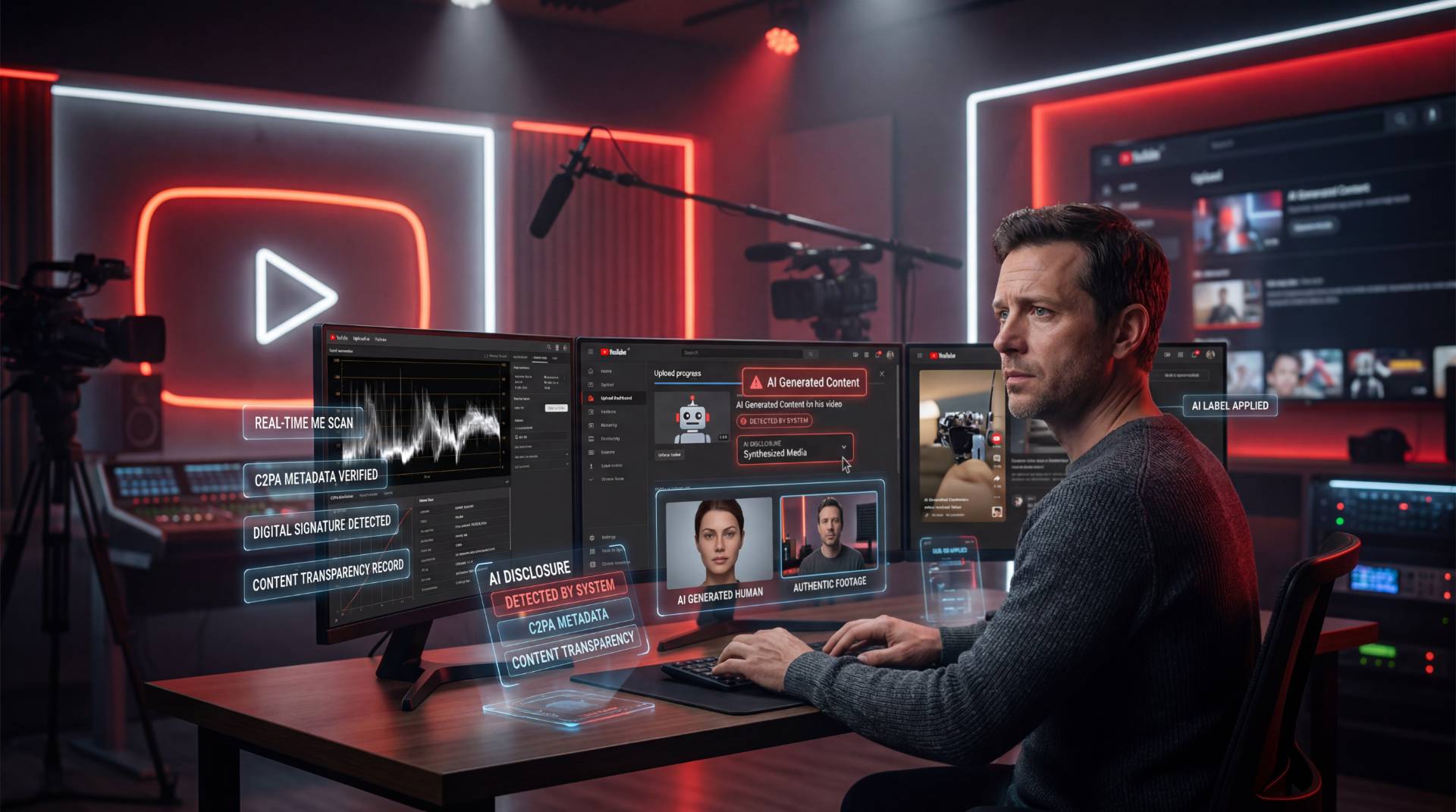
Let's be honest, most people scroll right past video descriptions. They hit play, they watch, they move on. YouTube knows this. And that's exactly why the platform just rethought how it handles AI disclosure labels.
If you create video content of any kind, this update is worth understanding. Not because it's going to upend your workflow overnight, but because it signals where things are clearly heading.
The Labels Are Moving, To Places You Can't Miss
Up until now, AI disclosure notices lived inside the video description. Which, again, almost nobody reads before clicking play. Starting with this update, that changes.
For regular long-form videos, the label now sits directly below the player, right there, before the description even loads. For Shorts, it shows up as an overlay on the video itself. You'd have to actively try not to see it.
The logic is simple: if a label matters, put it somewhere people actually look.
Not every video gets the same treatment, though. Content that's clearly animated, obviously stylized, or only lightly touched by AI tools, those disclosures stay in the description. The more photorealistic the AI involvement, the more front-and-center the label. That feels like a fair distinction, honestly.
YouTube Won't Wait for You to Disclose Anymore
This is the part that changes things more fundamentally. YouTube is now rolling out automatic detection for AI-generated content.
Here's what that means in practice: if you upload a video and don't indicate whether AI was used, YouTube's systems will take a look. If they detect significant photorealistic AI involvement, a label goes on the video, with or without your input.
Creators do still have some recourse. If your video gets flagged incorrectly, you can go into YouTube Studio and update the disclosure status yourself. So it's not completely out of your hands.
That said, there are situations where the label sticks no matter what, for example, if the content was made using YouTube's own generative tools like Dream Screen or Veo, or if the file carries C2PA metadata identifying it as AI-generated.
One thing YouTube has been clear about: having an AI label doesn't hurt your video. It won't affect how content gets recommended, and it won't disqualify you from monetization. The label is informational, nothing more.
What This Actually Means If You're Making Videos
Think about your current upload process. Is there a step in there where you consciously decide whether to tick the AI disclosure box? For a lot of creators, probably not, it's either overlooked or assumed not to apply.
That's going to need to change. Not because YouTube will penalize you for missing it (they won't, at least not in any punitive sense), but because their automated system will now make that call for you if you don't. And an auto-applied label, even if accurate, is something you'd rather control yourself.
Building disclosure into your standard upload checklist is a small adjustment. Going back through older content to assess what might qualify takes a bit more time, but it's worth doing before the system does it for you.
For anyone running a content operation with multiple team members, the logistics get a little more involved. Knowing which videos used which tools, keeping that information accessible during upload, making sure the right person is making the disclosure call, that's where having clean, organized file and project management habits pays off.
Platforms like FileReadyNow are built around exactly this kind of operational clarity, keeping production assets and documentation in order so nothing gets lost between the creative process and the publishing step.
The Direction This Is All Heading
YouTube's update isn't happening in isolation. Across the broader media and tech landscape, there's increasing pressure, from regulators, from audiences, from advertisers, to make AI-generated content identifiable.
C2PA metadata standards, watermarking tools, platform-level detection systems: they're all converging toward the same goal.
What YouTube is doing now is a relatively measured version of what's coming. Automatic detection will get more accurate. Labeling requirements will likely expand. The platforms that are figuring this out first will set the expectations everyone else ends up following.
For creators, the practical takeaway is pretty straightforward. Document what you're using, disclose it clearly, and don't wait for a platform to make that disclosure for you. Audiences are growing more sophisticated about AI, and being upfront about it is increasingly just part of building trust, not a concession, but a credibility marker.
Frequently Asked Questions
No. YouTube has stated that AI disclosure labels are informational only. They do not impact monetization, recommendations, or video reach.
YouTube now uses automated detection systems to identify significant photorealistic AI-generated content. It may also rely on C2PA metadata and disclosures from YouTube’s own AI tools like Dream Screen and Veo.
Yes. Creators are still expected to disclose when AI is used in realistic or altered content. If they don’t, YouTube may automatically apply a label to the video.
Table of Contents
Recent News

GPT-6 Sol Explained: Pricing, 1M Context Window, Limits, and Who Should Use It
2 weeks ago
Title: Microsoft 365 Copilot Gets a New Prompt Button Inside Word, Excel, and PowerPoint
2 weeks ago
Gemini 3.8 Flash Is Here: Same Price, Stronger Reasoning, and Better PDF Handling
1 month ago
Apple OpenAI Lawsuit Escalates as Both Sides Clash Over Confidential Data
1 month ago
ChatGPT Gets Major File Updates: Voice Uploads, Google Drive Sync, and Better
1 month ago
Adobe Acrobat Now Works Inside WhatsApp and ChatGPT, Bringing PDFs Straight Into Chat
1 month ago