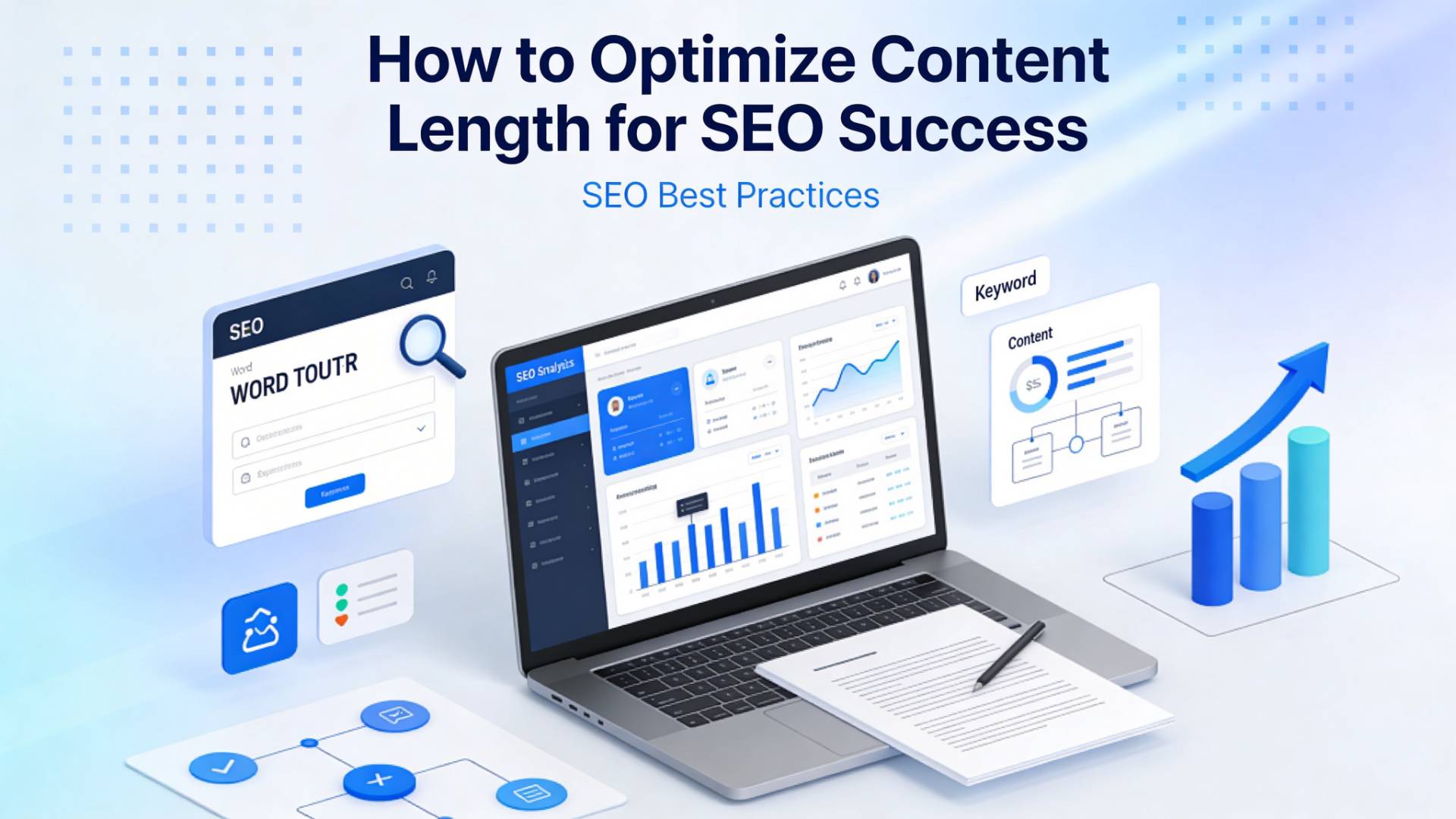
Creating content that ranks well in search engines requires more than simply targeting the right keywords. One of the most important factors influencing content performance is content length.
Many marketers believe that longer content automatically ranks higher, but SEO success is not determined by word count alone. Search engines focus on relevance, helpfulness, and the ability to fully answer a user’s query. However, optimizing the numbers of words in your content can significantly improve the depth, structure, and overall quality of your article.
Balancing content length with quality ensures your article provides comprehensive information without overwhelming readers. In this detailed guide, we will explore how to optimize content length, determine the ideal word count, structure long-form content, and use the right tools to improve your SEO performance.
Understanding Content Length in SEO
Content length refers to the total number of words in a piece of content, including blog posts, landing pages, product descriptions, and guides.
In SEO, content length matters because it influences:
- Topic coverage
- Keyword usage
- User engagement
- Readability
- Topical authority
Articles that provide thorough explanations often perform better because they address multiple aspects of a topic and provide more value to readers. However, length should never come at the expense of clarity or usefulness.
Why Content Length Matters for SEO Performance
Although search engines do not rank pages based solely on word count, content length affects several important SEO signals.
Improved Topic Coverage
Longer content allows writers to cover a subject in greater detail. Comprehensive articles often include:
- Definitions
- Examples
- Step-by-step instructions
- Practical tips
- Frequently asked questions
This depth helps search engines recognize your content as a valuable resource.
Better Keyword Opportunities
More detailed content provides natural opportunities to include relevant keywords without forcing them into the text.
For example, when discussing writing tools, you may naturally include phrases such as:
- word counter
- online word counter
- count words in word
- numbers of words
Using these keywords strategically helps search engines understand the context of your article.
Higher User Engagement
Longer content can improve user engagement when it provides meaningful information.
- Longer time spent on the page
- Increased social sharing
- More backlinks
- Improved reader trust
These factors contribute indirectly to better search engine rankings.
The Ideal Content Length for SEO
There is no universal word count that guarantees success in search engine rankings. The ideal length depends on:
- Topic complexity
- Search intent
- Competition level
- Audience expectations
However, general guidelines can help writers plan their content.
Recommended Content Length by Type
| Content Type | Ideal Word Count |
|---|---|
| Short blog post | 600 – 1,000 words |
| Standard blog article | 1,200 – 2,000 words |
| Comprehensive guide | 2,000 – 3,500 words |
| Pillar content | 3,500+ words |
Long-form content tends to perform well for competitive keywords because it offers deeper insights and broader topic coverage.
How Search Intent Determines Content Length
Search intent is one of the most important factors in determining how long your content should be.
Search intent refers to the reason behind a user’s search query.
Informational Searches
Users are looking for knowledge or explanations.
- How to optimize blog posts for SEO
- What is content length in SEO
These topics typically require longer, more detailed articles.
Navigational Searches
Users want to reach a specific website or page.
Example: Gmail login
These queries usually do not require long content.
Commercial Investigation Searches
Users are researching products before making a purchase.
- Best content writing tools
- Best online word counter tools
These articles often include comparisons, reviews, and recommendations.
Transactional Searches
Users are ready to take action, such as buying a product or signing up for a service. Content for these queries focuses more on conversion rather than word count.
How to Analyze Competitor Content Length
One of the most effective SEO strategies is analyzing competitor articles that already rank well.
- Search your target keyword on Google
- Open the top ranking articles
- Review their structure and depth
- Analyze their approximate word counts
Many SEO professionals copy competitor articles into a word counter to quickly analyze how comprehensive they are.
Using an online word counter helps writers estimate the average content length needed to compete in search results.
How to Structure Long-Form SEO Content
Content structure is just as important as content length. A well-organized article improves readability and helps search engines understand the information more easily.
Use Multiple Headings
- H1 for the main title
- H2 for major sections
- H3 for detailed explanations
Headings help search engines identify key topics within your article.
Write Short, Readable Paragraphs
Large blocks of text can discourage readers. Short paragraphs improve readability and make content easier to scan.
Add Lists and Bullet Points
- Tips
- Steps
- Benefits
- Comparisons
Include Examples and Explanations
Examples help readers understand complex concepts and make the article more engaging.
Using Tools to Track Content Length
Monitoring your word count helps maintain balance between depth and readability.
Writers often use a word counter to check article length while drafting content. Tools like FileReadyNow’s word counter tool allow writers to instantly measure the total word count and ensure their content meets SEO requirements.
These tools are also useful when writers need to count words in Word documents, website drafts, or blog articles before publishing.
Content Length vs Content Quality
One of the biggest misconceptions in SEO is that longer content always ranks higher.
Search engines prioritize:
- Helpful content
- Relevant information
- Clear structure
- User satisfaction
A shorter article that answers a question clearly can outperform a longer article that contains unnecessary filler.
Common Content Length Mistakes
Writing Only to Reach a Target Word Count
Adding unnecessary words can reduce readability and frustrate readers. Focus on value rather than volume.
Ignoring User Intent
Content that does not answer the user’s question will struggle to rank regardless of length.
Keyword Stuffing
Overusing keywords like online word counter or numbers of words can harm SEO performance. Instead, use keywords naturally within the context of the article.
Tips for Writing High-Quality Long-Form Content
Start With a Detailed Outline
An outline helps organize ideas and ensures you cover all aspects of the topic.
Answer Related Questions
Including common user questions increases the chances of appearing in search results.
Use Real Examples
Examples make the content easier to understand and more practical for readers.
Track Your Word Count While Writing
Tools like FileReadyNow’s word counter tool help writers maintain the ideal content length while drafting articles.
Final Thoughts
Optimizing content length for SEO success requires a balanced approach.
Instead of focusing only on the numbers of words, focus on creating content that is:
- Informative
- Structured
- Engaging
- Valuable to readers
By combining strong keyword strategies, proper structure, and the right word count, you can create content that performs well in search engines and delivers real value to your audience.
Frequently Asked Questions
Most SEO blog posts perform well between 1,500 and 2,500 words, but the right length depends on the topic and search intent.
Word count alone does not affect rankings. Search engines focus on useful, relevant, and high-quality content.
You can use a word counter or online word counter to quickly check the numbers of words in your article.